a picnic with portland punk lifers noxeema
Punk veterans Erin, Cissie, Katie, and Marat on making punk about the human body, returning with their first 7" since 2019, and the eternal balance between work and art.
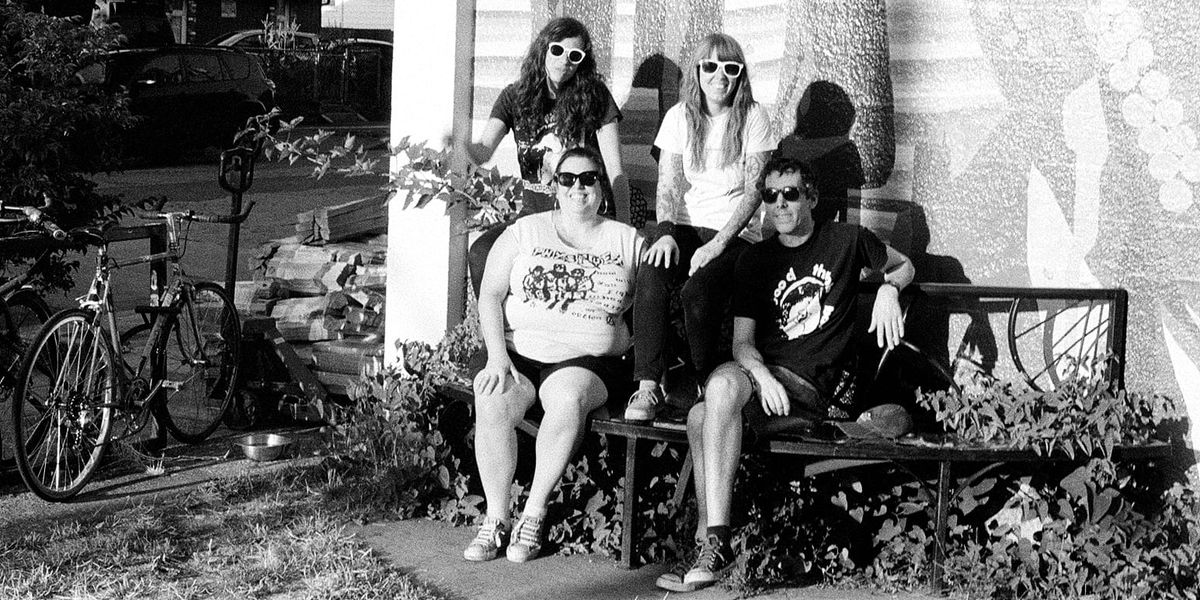
Coming in on my own 20 years of being actively involved in DIY culture, the idea of being a lifer has been something I’ve pondered a lot lately. With so much in life feeling accelerated and temporary, and youth always being held in ideal, being a lifer is aspirational. Portland’s Noxeema is comprised of four folks I’d certainly consider lifers: Erin Yanke (drums), Cissie (bass), Katie B (vocals), and Marat (guitar). Each has an extensive punk CV, but when their powers combine, they form one of the best Portland punk bands of the last decade.
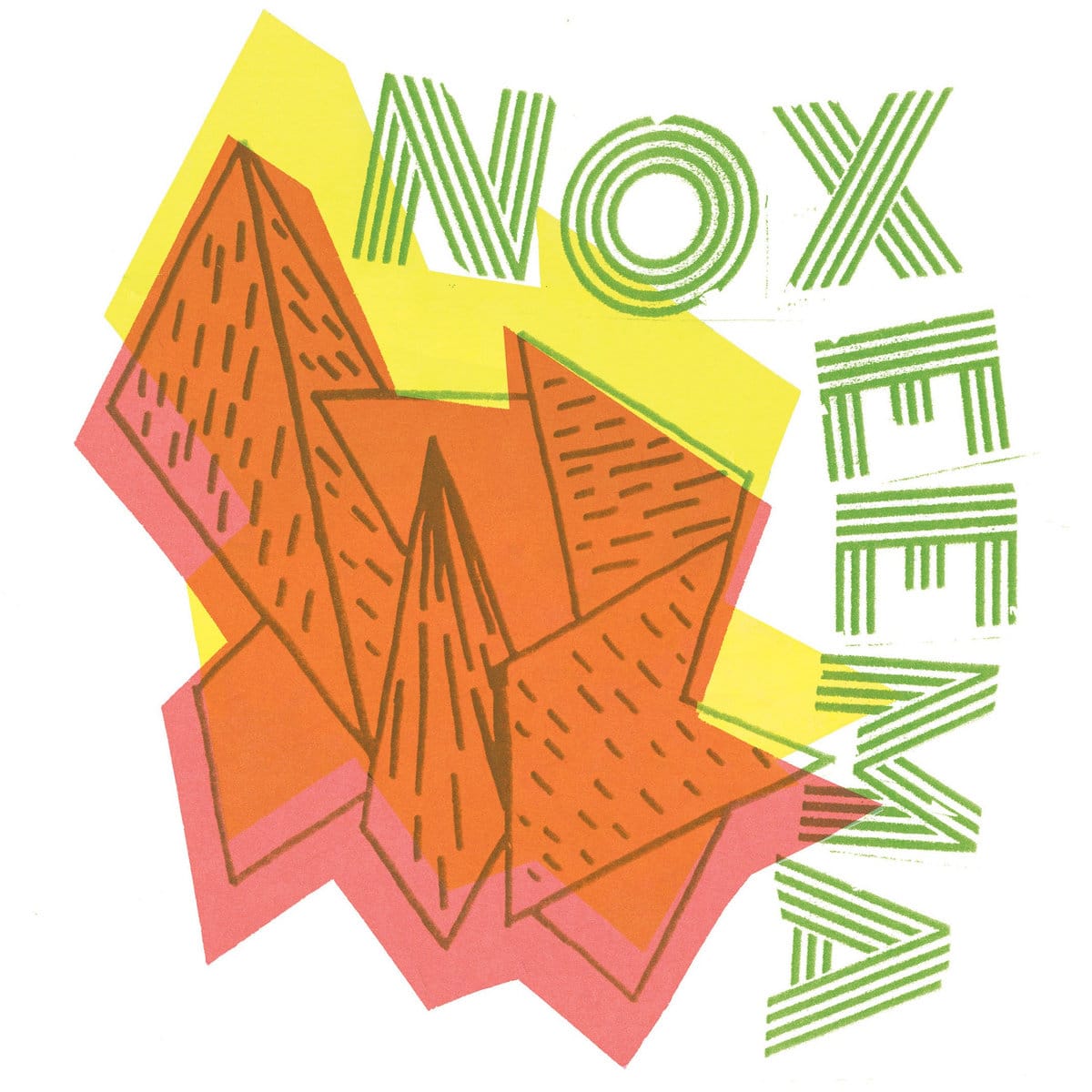
Having released their second EP this spring via New Orleans based label Raw Sugar records, Noxeema reiterate what I love so much about their music. They sound purely punk in the broadest sense and the simplest terms, creating a short fast loud emulsion of individual inspirations and approaches to their instruments, unbothered by the stipulations of subgenre.
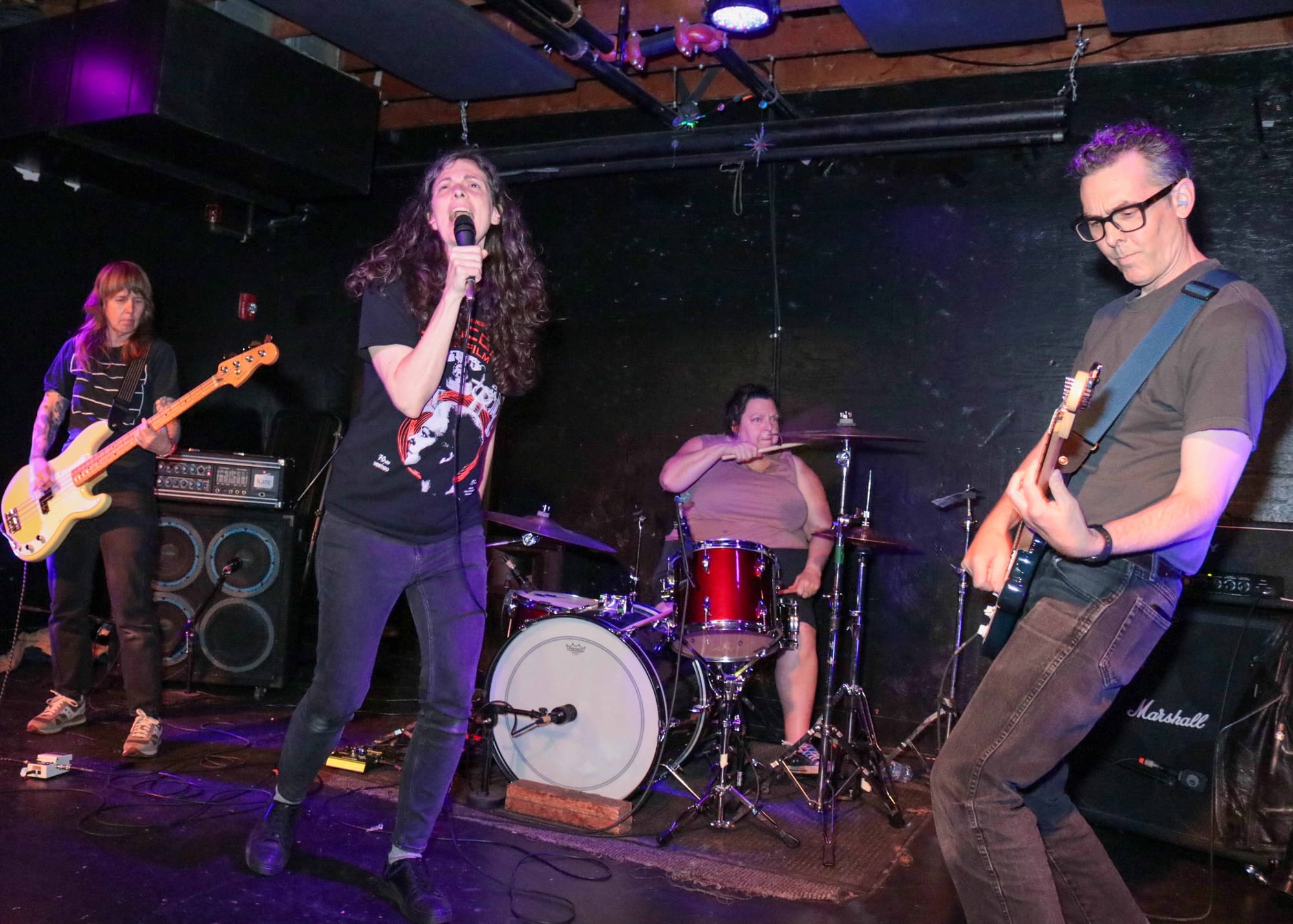
Marat’s clean, lean chords slash sabres furiously, Cissie’s basslines rumble alongside like a motorbike, while Erin’s 4x4 drumbeats barrel roll the entire operation towards each song’s finish line. Live, Katie bops and pogos on the mic, electrically charged by the band’s collective wailing, metaphorically spitting out barbs against the frequently fucked state of affairs and their inevitable impact on the mind and body.
On the cusp of their record release this spring, I sat with the band in the front yard of Erin’s house, moving the table out of the shade of the tree and into the afternoon sun so we could relish in the first real warm weekend of the season. Living right off a major city street, Erin’s house is tucked back away from the traffic and the neighborhood is abuzz with outdoor activity. People are tilling in their gardens, bikes are clicking past, and in the house next door, some kids are singing along to Gloria Gaynor’s “I Will Survive” on karaoke. The band waved at another neighbor, with Erin adding: “She’s the fifth member of Noxeema.”
The band and I gathered around the picnic table for a snack of banana bread, coffee, and crudité with hummus and homemade vegan ranch for dipping to discuss their new EP and the current state of lifer-hood in the city.
OK, the name Noxeema, did it come from the skincare company or was it from Wesley Snipes’ character Noxeema Jackson from To Wong Foo, Thanks For Everything! Julie Newmar?
Katie: OK, this is literally how the conversation went. We were trying to think of band names, we said a few I don’t remember, and then Cissie said: “Eczema, I like the word eczema.” And I said, “I have eczema…” And she was like, “so do I!” Then I said, “Did you know that Noxzema was originally a skincare for eczema? No Eczema.” And then Cissie said: “I like Noxeema.”
It’s got that satisfying graphic look, of N’s and X’s and E’s. No matter how you write it out, it looks cool.
Katie: Yeah, that definitely came up.
But I had to double check because it was the same spelling as the movie character.
Erin: We didn’t even know, we found out afterwards!
Katie: I finally saw that movie recently because we played it at work.
I was reading something about your new record and how it was your first since 2019. Seven years seems like a long time, but you factor in we had a pandemic. Sometimes that feels like another lifetime, and I think there’s a little bit of denial in that loss of time from it…
Katie: Yeah our last record came out November of 2019, and then the world changed.
Cissie: We also just move slow.
Are you a weekly band practice type band? Do you write together?
Cissie: When we’re all around we do. But we take vacations, take time off or get too busy or whatever. So sometimes we don’t practice.
Erin: But it’s been pretty steady. We’d still meet up every week during the pandemic, on Zoom, go to the park, drink coffee. We’re consistent, we’re just slowly consistent.
For the nine songs on the record, was that whittled down from more, like the best nine out of twenty or…
Cissie: There was a couple we rewrote and were just like nah.
Erin: Whittled down from, like, 12.
Katie: There were some songs I wrote lyrics to, but never liked them and never rewrote them until I made an assignment for myself.
Writing songs is hard! Especially as a collective effort!
Marat: Maybe it’s not that hard, and maybe it sounds weird, but maybe it’s just not our priority as a band. We could probably do ten songs in three months.
Katie: I’d slow us down for sure.
Marat: We’re consistent about practicing, but it’s not this churning, productive atmosphere. It’s also just hanging out. I think a band should be a vehicle for creating community and being with your friends.
Cissie: We usually practice 20 or 30 minutes and hang out for an hour and a half or more.
Erin: Yeah, when we stopped practicing on Saturdays, the coffee guy on the corner got real concerned. “Where’s the band? What happened?! Did you break up?” No, we just switched practice days.
Cissie: Also, the pizza shop down the street, Sparky’s. They know us too. We’re always going there after practice.
There’s going to be a lot of attention on you, Katie, because I really love the lyrics on the record. There’s a lot of songs dealing with the body and the outside world affecting the body. Specifically the song “Sick.” There’s been so many songs in punk about being “sick of _______,” but your song, it feels like “the problems of the world and capitalism are genuinely causing me illness and discomfort.” Without getting too personal about it, if you don’t want to, I was wondering about your experience with that?
Katie: At the time when I wrote it, I was in natural medicine school to become an acupuncturist, so I was thinking about it all the time. But I’ve had chronic health issues for over two decades, so it’s just something I think about all the time. It’s also on multiple levels: physical, emotional, mental, spiritual. I feel like, especially for highly sensitive people, they just notice it more, how it can get trapped in your body and physically affect you.
It can come in different ways, but comes out in illness if you don’t deal with it or you don’t have a way to deal with it. It doesn’t necessarily mean therapy, but for some people, it sticks more to them than others, and for some others it rolls off their shoulders. I feel like it plays a part and affects everyone mentally. I think about the macrocosm/microcosm a lot. If you look at what’s happening with the Earth and the climate, the disaster that’s happening with that. So of course, everyone on a microlevel is freaking the fuck out. We’re all a reflection of the macrocosm.
I really loved the lyrics to “River.” You mention in the liner notes it being inspired by the author RF Kuang, as well as a conversation with the activist adrienne maree brown and the comedian Morgan Bassichis. I was wondering what specifically were you pulling from these inspirations?
Katie: I wrote that song in October 2023. That image literally came from RF Kuang’s book Babel. I was listening to the audiobook in my car, and there was that line in the book, so I paused it and made a voice recording in my notes app of that line. “Stick your fingers in the mud, you can’t stop the river from flowing.” I was thinking I had to make a song around this idea. Then October 7 happened, and I listened to this Instagram Live between adrienne marie brown and the other person, a vocal person for Jewish Voice for Peace, having a conversation about Palestine. Some dam imagery came up in the conversation, which I was also wanting to incorporate into the song. Directly used some ideas from that, but I can’t remember the total specifics. Are you familiar with that book [Babel]? You should check it out.
Not not at all. But if it’s a Noxeema recommendation…
Marat: It’s great!
Erin: I intend to read it.
In the last issue of my zine, I was really getting into the idea of lifers.
[everyone giggles]
And I every time I bring this up, people giggle, as the word sorta implies getting old and no one likes to be considered “old.”
Erin: My mom, who’s 81, everytime someone says old, she goes: “Old-er, I’m just older.”
Erin, I know on your website, you have “lifer” on there as a point of pride. An honorific. Do you guys feel like lifers?
Marat: I don’t know if I’m a lifer or not, but I think if anyone finds a reason to do something creative, being involved in making music, that’s a great thing. Conversely, if people lose that passion for some reason, it’s okay to let things go.
It’s that sense of play and creativity that I wonder if people are made to let go of, going from childhood to adulthood. Being creative, using your imagination, and being involved in DIY keeps you in that realm of enjoyment and creativity. I want to continue to keep doing that and finding community through it.
Erin: I think learning how to figure shit out is the basis of my experience with punk rock. Somebody you know is doing something cool. How do you do it? You figure it out, you ask questions. Those are amazing life skills that people don’t have anymore. That comes up a lot with working with people who are younger—how do you create a world that is challenging enough for people to get skills that doesn’t go over into trauma. How I grew up, people could say, “Oh my god that’s child abuse!” It didn’t feel like neglect, it was just latchkey kids, but there was just a point of figuring things out that I really appreciate about us—the punks and the weirdos.
I think being a lifer is realizing that I’ve made enough of my own world that I don’t have to figure out how to fit in. I can keep doing it myself. I have a fantastic life, and while there’s a lot of normal people stuff that I don’t know how to do very well, I don’t have to. Maybe it will come and bite me in the ass later, but so far so good. Fuck it. It’s great. The way that I approach thinking about being a lifer, is living, not putting shit off, being engaged with the world, being committed to our people and being present in my own life.
That’s a great way to think about it. It’s about learning and developing skills, and I feel like people stop learning at a certain point, lose that curiosity. People graduate college, I graduated high school.
Erin: “Now I know everything!”
Cissie: “I have my family, I’ll focus on that.”
Erin: Focus on the Family... [everyone groans and laughs]
Katie: I used to do visual art all the time, but I never do anymore. The band is the only creative endeavor I’m attached to right now, so it’s really important for me. I feel really busy and not very good at time management. I’d love to do other creative things, but I haven’t figured that out at this point. Back to the lifer thing: It’s kinda cool to be in a different place in life where I’m middle aged, still in the scene, but through a totally different lens.
And you have the whole rest of your life to explore those sides.
Marat: I feel like I wanna say this thing explicitly that we are all kinda dancing around. I think work just steals so much of our time. People stop being involved in punk or whatever because maybe they lose some kind of motivation or magic, but also it’s hard to work 40+ hours a week and have the energy to be involved in creative things.
It’s always that thing of work. I have to do this 40 hours a week, or more, to make these other things happen. I do this fucking job so I can do everything else.
Marat: But then you don’t have the time or energy!
Exactly. Then it goes into those questions of how much self-care and recharging, “do I gotta keep making it happen” kind of thing. Those are all personal decisions.
Erin: And it’s a spectrum, you can totally go too hard one way or another. You don’t have to get stuck in a spot, which I think people who have quit punk run into. “If I don’t have to do everything, I’ll just do nothing. Fuck it, I’m going to go work in an office and forget I ever was a punk rocker.” Or get burned in some personal way.
But you don’t have to quit forever, either. There is this huge spectrum, and I think part of being lucky enough to live here when it was fuckin’ cheap is that I could set the habits of doing stuff and staying busy. Then increasingly, having job stuff take on more and more necessity and also importance. I’ve been lucky enough to have jobs where I love the work I’ve been doing, which has not always been true. It balances out, so for me, it’s more of a wave of when you’re involved or not.
When the scene gets stagnant, it’s usually when people just stick to their roles. The people that just go to shows and buy records don’t ever switch, and the people that are always doing stuff (like booking shows) feel like there isn’t anyone to take their spot. They burn out or quit. Then they feel like they can’t go back after. The magic of punk rock is not having anyone tell you who you are, and you can change at any moment. And I think one of the good things about Portland is the variety of ages. You can stop doing stuff because new young people will come in and take over, and change things you’ve done, make it cooler and weirder or whatever.
Does punk still feel like a liberating, inspiring space? What keeps you coming back to the well?
Marat: I’d say yes, but you have to keep working at it. Keep seeking out people you find inspiring, encounter people you find affinity with.
And speaking of finding affinity, who are your favorite Portland bands at the moment?
Cissie: Right now, I really like Piggy Bank.
Marat: Piggy Bank, Arsenal Mall, Love in Hell, Retirement [Cissie’s other band].
Erin: Justin and Candy always have great bands [Dark/Light and Era Bleak, among others.] Watching Justin play drums again is just a joy.
Corby Plumb is the Portland-based writer behind the Totally Different Head zine.
see/saw is a reader-supported publication. If you enjoyed this article, please share it and subscribe.