tive is the osaka hardcore band taking japan by storm
With sparkly aesthetics and ambitions, Tive is inspiring a new generation of Nippon hardcore.
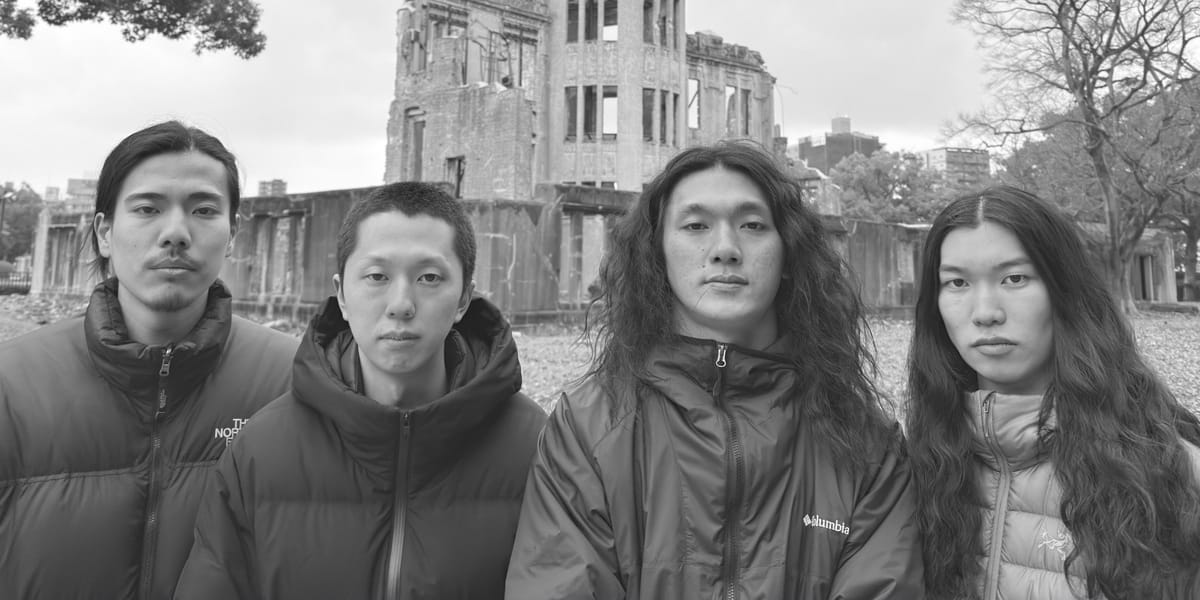
Though typically characterized as a country of quiet, polite people, Japan’s hardcore scene is overwhelmingly dominated by heavy beatdown bands met with intense, violent moshing. Legendary bands such as Osaka’s Sand and Tokyo’s Loyal to the Grave still draw large crowds some 30 years after their debut and have inspired a whole new slew of violent beatdown bands for the next generation.
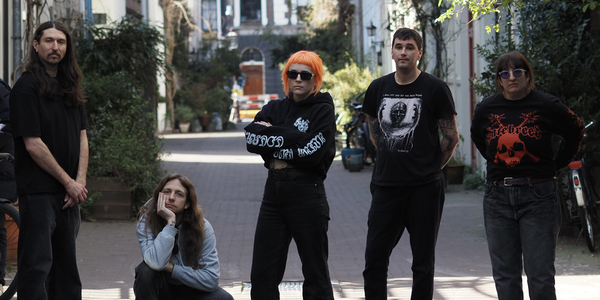
One band, however, decided to forge its own path. Osaka’s Tive (pronounced teeve) debuted in small live houses in Japan’s Kansai region in 2019, slowly but surely building a rabid fanbase. Inspired by bands such as Turnstile and Trapped Under Ice, Tive is groovy and danceable in all the right ways. With an emphasis on style and catchiness, Tive is unlike anyone else in the Japanese hardcore scene. They just wrapped up a nationwide tour of Japan with 21 dates in 21 different prefectures with 52 different bands supporting.
After finishing up that run, Tive rocked the fall Bloodaxe Festival in Kawasaki with an electric performance. After recovering from the mosh pit, I caught up with the band backstage to talk about their origins, inspirations, and the recent tour.
Can you guys tell me about the beginning of the band? How did Tive start?
Hajime (vocals): In 2015, our first year of high school, Kenta, our guitarist, took me to see Turnstile. That was my first hardcore show ever. We loved the experience so much that we started a Turnstile cover band in high school and played at our school festivals. Back then, I played bass and sang, Takuma was the drummer, and Kenta was the guitarist. Ikumi (who now plays bass) joined later.
When did you debut as Tive?
Hajime: We started playing shows as Tive in 2019, mostly in Kyoto at first.
Your style of music is very different from what you see from other successful bands in Japan’s hardcore scene. Was it challenging to win people over with your unique sound?
Hajime: At first, no one reacted to anything. Everyone just stood and watched. No singing, dancing, moshing… nothing. Really, it wasn’t until playing Summer Bash Festival in Osaka in 2023 that we started getting good reactions. After that, we started getting more opportunities and recognition within the scene. Over time, the lack of reaction slowly turned into people singing along and moshing. When we recently played in Sapporo, we were shocked by how everyone seemed to know all the words to our songs and sang along. People are actually listening now. It’s really surprising.
What does the name Tive even mean?
Kenta: It’s meaningless.
Hajime: Yeah, it’s absolutely nothing. [laughs]
Really? You gotta give me more than that; how did you decide on it?
Hajime: So, we really loved bands like Turnstile and Trapped Under Ice. So we took the “T” in Tive from them. The rest of the name really is meaningless. We wanted to be like other legendary bands in the Japanese hardcore scene, such as Palm, Sand, and Numb; they all have four letters in their name, so we thought it would be good if our name had four letters too.
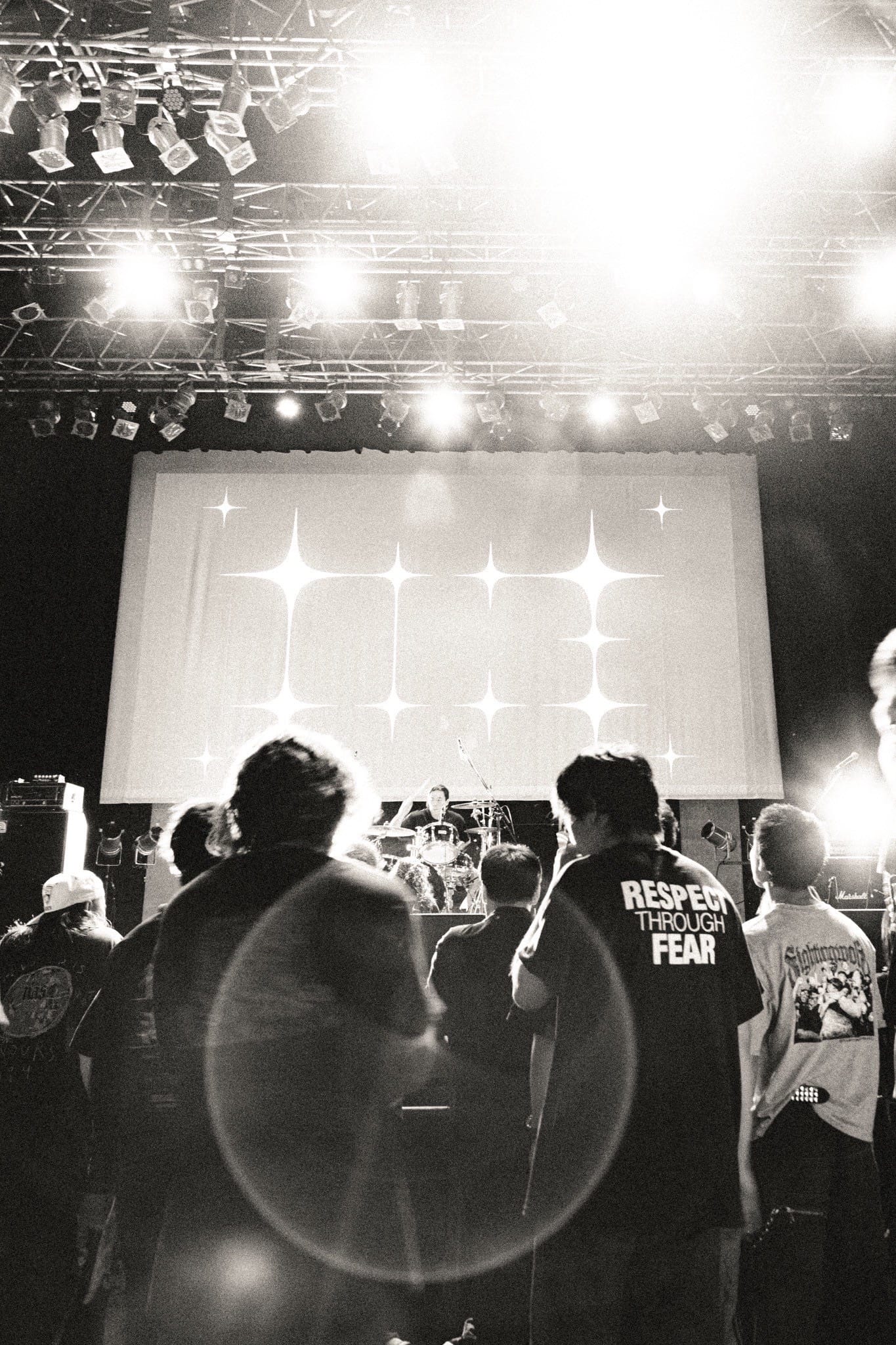
How about the band’s logo? It’s very bright and sparkly as opposed to most bands in hardcore.
Hajime: Well, we talked about it a lot before debuting it, but it was Kenta’s design and idea.
Kenta: Yeah, what was the inspiration for it… I don’t really know. [everyone laughs]
Hajime: We just love sparkly, bright things, like kira-kira [the onomatopoeia for “sparkling” in Japanese].
Turnstile is obviously such a big inspiration for you guys, but what about other bands?
Hajime: Kenta writes a lot of the music, and his favorite is definitely Code Orange.
Kenta: I also watch a lot of hate5six videos… I get really inspired by lots of bands and performances on that YouTube channel.
Ikumi: I really love vein.fm.
Takuma: Jesus Piece, Gulch, and Knocked Loose have been some recent inspirations, too.
Hajime: In Japan, definitely Palm. Palm is Osaka hardcore. Also bands like Numbernine and Tiger.
What does it mean to be part of the Osaka hardcore scene—to be an Osaka band?
Hajime: Well, when we first started, we were mainly being booked in Kyoto, so people thought we were from there even though we’re from Osaka. It wasn’t until we literally started to put “Osaka Hardcore” on our shirts that people began to realize we were from Osaka. These days, we aren’t really trying to represent Osaka; we want to represent Japan as a whole. That’s why we changed our shirts from “Osaka Hardcore” to “Nippon Hardcore.”
Kenta: Although we do love how Osaka bands always go for a very catchy sound in their music. Kinda like the “Pon Pon!” in Reverse Boyz’ “Ponpon!!,” the “Ohhhh!!!” in Sand’s “Poser,” or the “Oi Oi!” in Palm’s music…we also want to make music that is catchy and moshable. That’s why we wrote our song “Ayy, Ayy, Ayy” to be so catchy.
Japanese hardcore is really well respected in the international scene. Why do you guys think that is?
Hajime: Is it really? We don’t feel like that many people overseas care about Japanese hardcore… unless you’re talking about Kreulty. [laughs] It seems like people care a lot more about countries like Indonesia or Australia from this side of the world… we would love it if more people started listening to Japanese hardcore.
You guys just toured all over Japan, which bands don’t really do anymore; what was the inspiration for the tour? How did it go?
Hajime: When bands tour in America and Europe, they don’t do small tours, they tour all over the place. So we wanted to do something like that in Japan.
Kenta: The tour was amazing… It was the best.
Hajime: Yeah, it was really fun, but now we’re super tired. [laughs]
What city sticks out in your mind as the best or most memorable?
Kenta: Okinawa was really amazing… it was just like we were on vacation. [everyone laughs]
Hajime: Yeah, totally. Oh, and Hokkaido. It was our first show of the entire show. We were supposed to take a big ship there. It was going to be a nice, peaceful journey. But on the day we were supposed to travel, the ship canceled on us, so we ended up having to drive for about 30 hours from Osaka to Sapporo. We were totally exhausted when we got there, and our spirits were pretty low, but the show ended up being amazing. The audience was super excited and energetic, and I think it was the perfect note to begin the tour, as the rest of it went amazingly.
What was it like booking shows in places like Nara, Yamaguchi, and Iwate, which don’t have a very active scene?
Hajime: It was very difficult, of course. We basically looked up every active hardcore band in every prefecture in Japan and then looked up any venues and studios we could possibly play at. After that, we contacted all the bands and venues, and got shows booked in 21 prefectures. We would’ve played in all 47 prefectures if possible, of course, but about 21 ended up working out.
How was the reaction in the smaller prefectures?
Hajime: Because there aren’t many shows happening in those smaller places, all of the hardcore fans in them turned up, and their reactions were really big. Their reaction was actually even bigger and more enthusiastic compared to bigger places like Tokyo and Osaka. Even though the crowds might not have been as big, people had so much fun, and the reactions from fans were so intense that I’m really happy that we ended up touring there.
Are there any bands you toured with that stick out in your mind that more people should know about?
Takuma: Break of Chain was really amazing, even though they aren’t really a small or unknown band in Japan. We played with them in Fukushima, but they’re from Sendai in Miyagi.
Kenta: Yeah, we were so excited to play with them. We were singing their songs in the car together on the way to the show. [everyone laughs]
You’ve opened for tons of popular foreign bands over the past few years; what were some of the best bands to open for?
Hajime: Are we allowed to say Turnstile? [laughs] That was an amazing experience because they were our main inspiration. Also, for me, Show Me the Body and Soul Glo.
Takuma: Being able to open for Zulu before they broke up was really awesome.
Kenta: Drain was so sick… oh, and Spy.
Ikumi: As for me, playing with Gel in Tokyo for what ended up being their last show was incredibly memorable.
What do you all want for the future of Tive?
Ikumi: Headlining Sound and Fury and Outbreak Festival.
Kenta: Sorry about him, he’s an idiot. [everyone laughs]
Hajime: Well, of course, we’re working on new music. And we hope to play internationally one day, especially in America…maybe the West Coast would be cool. Our latest EP was mixed by Charles Toshio, who has mixed for Real Bay Shit artists like Scowl, Gulch, and Sunami. It would be really cool to go play in that area and see him in person.
Is there anything else you really want people overseas to know about Tive?
Takuma: We aren’t a Japanese hardcore band. We’re a Nippon hardcore band. Or at least, that’s what we’re becoming.

Knox Yoder is a freelance journalist, punk/hardcore promoter, and tour guide based in Osaka, Japan. They enjoy ska punk, despite it all.
see/saw is a reader-supported publication. If you enjoyed this feature, please share and subscribe.