national photo committee want to do this interview right now
The Chicago band made 2026’s first splash with their new album Red Hot Photo Committee. “I was like, ‘If I don’t drop this right now, I’m gonna never make music again,’” said Maxwell Bottner.
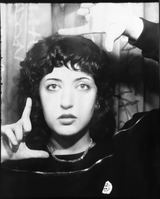
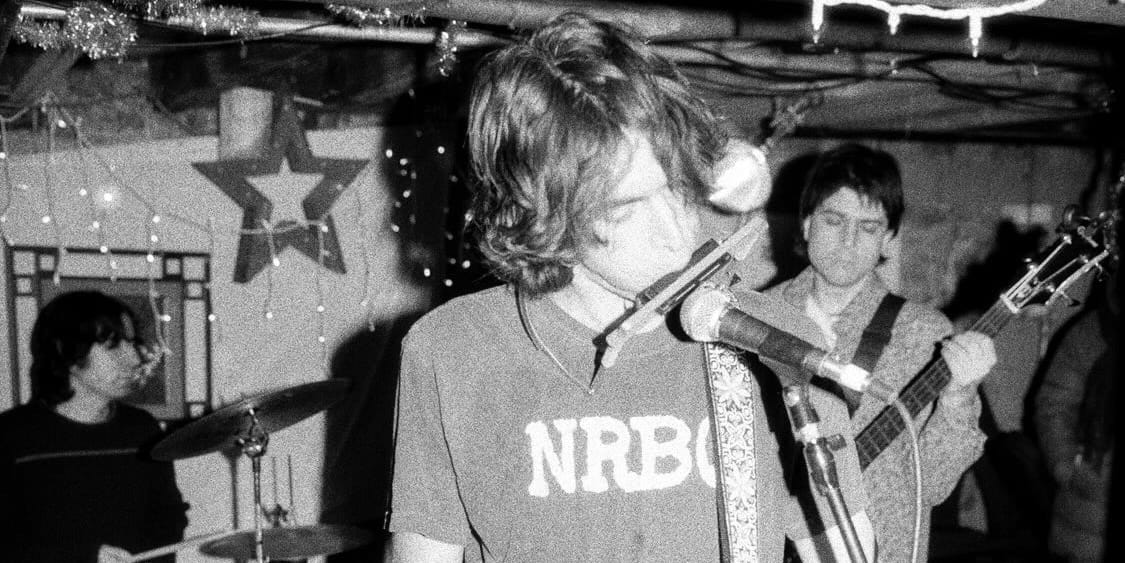
On the last night of the year, National Photo Committee dropped a surprise album—the first look at Red Hot Photo Committee, their long-anticipated LP. For one glorious week, the album could be heard as an unmastered YouTube video, but it was already a fully realized product filled with DIY gusto, deep dulcet vocals, and pedal steel twang. The link has since been removed in anticipation of an upcoming physical release, but the Committee will be with you again shortly.
“It was totally spontaneous. I was just like, I need a little bit of attention,” said frontman Maxwell Bottner two days after the release. “I remembered that there’s no consequences at all to me just putting it out because it had been an unlisted YouTube video link for a while, and I was just sending it to anyone who wanted to hear it. Probably 50 people have heard it at this point, so I might as well drop it.”
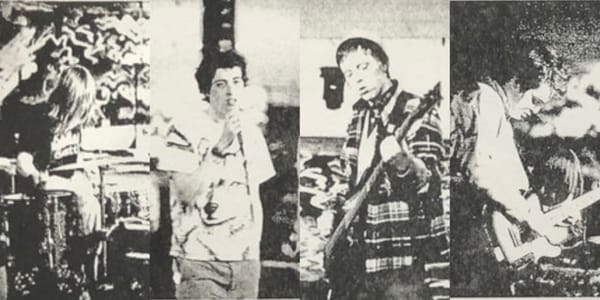
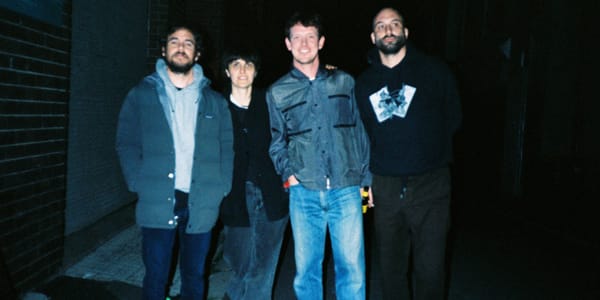
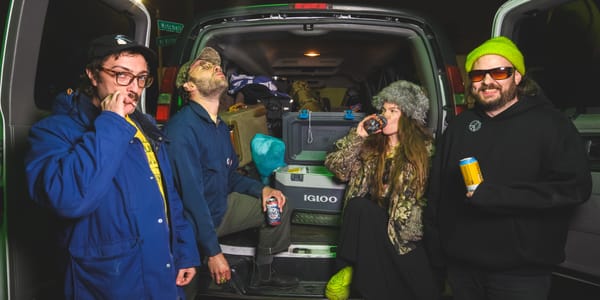
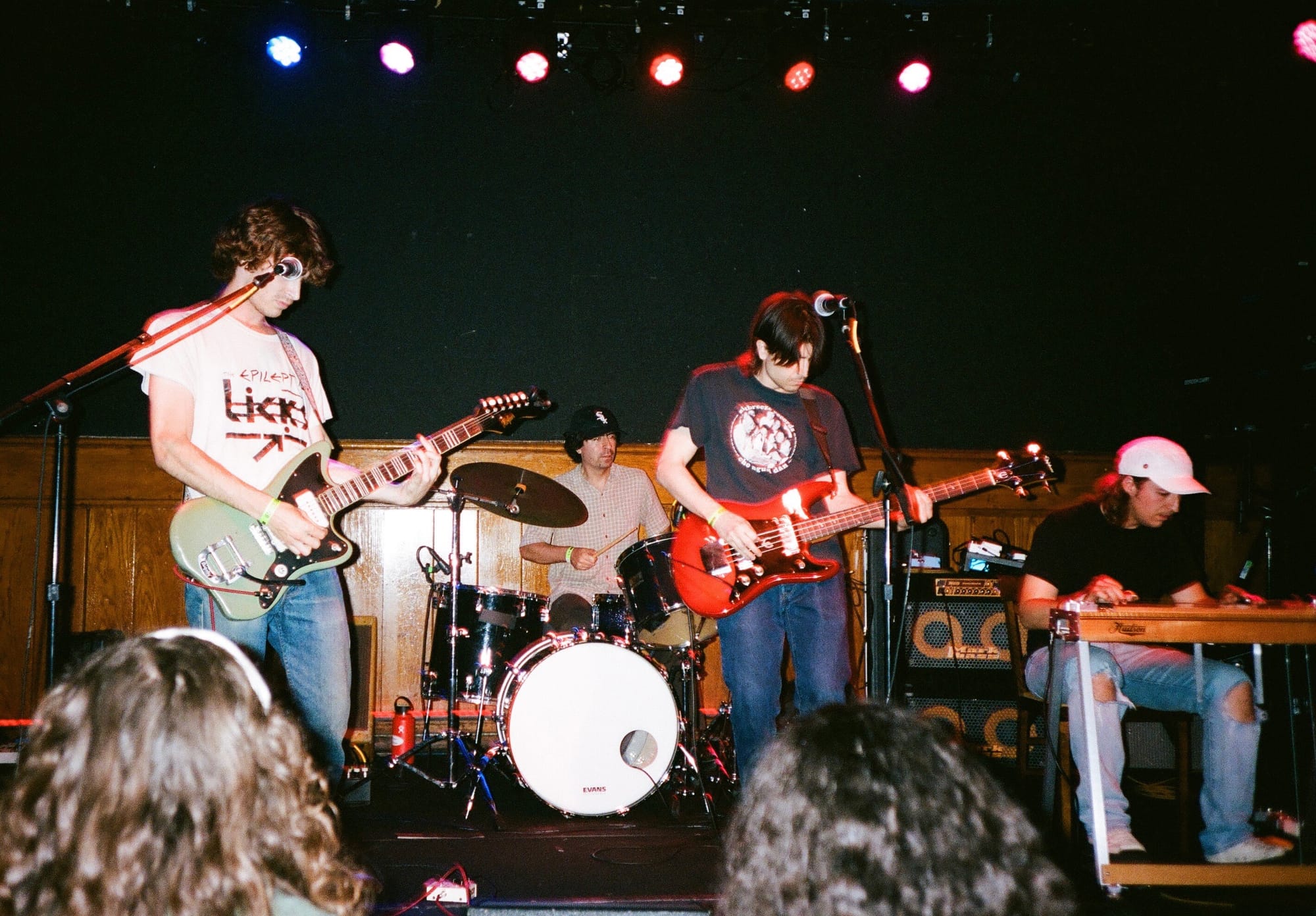
All impressive musicians on their own, the self-described “interesting rock” quartet made up of Bottner, Henry Moskal, Will Carr, and Jason Shapiro is one of Chicago’s best live acts. They’ve impressed at shows with Pardoner, Hotline TNT, and Sharp Pins—plus a festival highlight with their final day performance at NYC’s Bread and Roses. With an album that captures their on-stage chemistry, the world will know what makes NPC a Windy City staple. When Bottner was approached about this interview, he insisted we speak just hours later.
This is the first ever interview I’ve done the same day that I’ve asked.
I just thought that would be fun to do it day of. I feel the momentum. I just gotta keep it going.
I listened to it yesterday while cleaning my apartment, but what do you think is the ideal listening situation for Red Hot Photo Committee?
Maybe you’re in an escape room and you can’t quite figure it out yet. It’s something you put on, and then the way out will reveal itself. Or, I think it’s a good commuter album as well. I listened to it on an airplane recently, and that was a good experience ’cause it was also the first time I’ve used AirPods. So it felt like I was hearing it for the first time, which was nice ’cause I had been hearing it too much at that point.
How long had you been sitting on it?
I finished it around the end of November. But it had been almost done for a crazy long time. And the song cycle itself started quite some time ago. The second track on the album, “If I Wait,” I started writing in like 2021 or something. The first time we ever played that song was our first show after our COVID hiatus. I almost didn’t put it on the album ’cause it felt dated to me just in terms of, I don’t know, you inevitably progress a lot as a writer over the course of four years. But some people I trust convinced me to keep it.
What was the writing process behind the songs to get them to this point?
I write songs really slowly sometimes, and then I write some very spontaneously, and everything comes together immediately. I had this job at a Catholic school for the last four and a half years where I had an unpaid two and a half hour break in the middle of my day, so most days I would sit in Lincoln Park and try to write something.
A lot of the songs here started on acoustic guitar, and a lot of the time, stuff that I was writing in the park ended up becoming album lyrics. I try to write standalone lines whenever I think of them, and then I have just a long Notes App note in my phone where they all live, and what I do is try to make connections between the lines I wrote. And then from there, I edit until meaning arises. Track seven, “Adelaide,” came about because I had four or so lines, and I essentially filled in the blanks.
The first release you put out was in 2021, Songs About Sticks and Rocks. Was that a COVID project?
Yeah, just the four songs. But it was really weird since National Photo Committee has been a band since I was 20 years old, and we played our first show a day or so after my 21st birthday. I started the band with the intention of this is not a solo project, this is gonna be a very collaborative band, and then it very quickly was like, this is not gonna go anywhere unless I come into practice with some complete songs. We played four or five extremely short sets that year, and then COVID happened. I just was like, I have to make music right now. So I recorded all that stuff by myself around May 2020. And then, way later, Jason [Shapiro] recorded some guitar leads on two songs. But yeah, that was a solo jaunt out of necessity.
Since then, would you say you’ve tried to make it more of a multi-person thing again?
Yeah, as soon as we were able to play shows again, my goal was to record a whole album as a full band. We had a few friends drift in and out of the band, but then we locked in as a three-piece in 2022. Did a couple short tours with that lineup and recorded some stuff that has never seen the light of day. And then later that year, Henry [Moskal] joined on pedal steel. My friend Leroy played drums with us as well when Jason stepped out of the band for a bit, and he plays on half of the album. It wouldn’t have happened without everyone that’s involved.
Did Henry come into the band already playing pedal steel?
It’s very funny to me because I thought that too when we started playing with Henry on steel. But then, seemingly out of nowhere, all of these rock bands started adding pedal steel players to their lineups. I learned about MJ Lenderman and Wednesday, and all those North Carolina bands, like right after that. I met Henry through my friend Molly, who grew up with him; I think we got to talking about Jerry Garcia starting New Riders of the Purple Sage just to play pedal steel. And then Henry was like, “Oh yeah, I actually just got a pedal steel and just started learning how to play it.” I don’t think he had even been playing pedal steel for a whole year at that point.
Shortly after that conversation, we met up to jam, and I was just like, “This guy’s got it.” He’s so good. It’s crazy how a handful of the songs on the album were written before he was in the band, and now I can’t imagine them without him playing on them.
Did you end up doing the live-type recording for this album?
Pretty much. I recorded it all on my Tascam 488 8-track, which is an awesome machine. The big downside to using that, though, is that you can only record four tracks at a time. So the way that we would record was we would do guitar, bass, and then all the drum mics going into an eight-channel mixer, which I routed to the other two tracks, panned left and right. Henry’s parts were overdubbed later. But it feels and sounds like it’s recorded live ’cause the guitar, drums, and bass are all together.
I think that my insistence on doing it in this very specific way drew the whole process out way longer than it needed to be. But I’m happy with how it sounded. I did what I set out to do. I did kind of rush it at the end, though. I brought my 488 to my friend Brooks’ studio, called West Town Magnetic. They have way better monitors and microphones, so we mixed it to ¼ inch tape and recorded some overdubs. I needed to do everything in a session or two, or else it was never gonna get done. I would’ve just kept tweaking it forever.
Do you have any further release plans for this album?
Yeah, one of the best labels in the world is putting it out. I’m very excited. I plan on mastering it through this place in NYC that can do a fully analog vinyl master, which is cool. Hopefully, we’ll have a preorder up in the very near future. Mastering for vinyl was a concern that a few labels I talked to had, since there’s a few really long tracks on the album, but I was thinking about Miles Davis’s Get Up With It record, which has two tracks that are over 30 minutes, and it sounds great on vinyl! And I imagine that mastering technology has only improved since then. So we’re not worried about that anymore.
Not being afraid to go long is actually one of the things that I appreciate about your band. Does that just come naturally, or is every single thing written down?
It’s a planned thing in the way that I sometimes write sections of songs that can be stretched out indefinitely. I mean, the last song on the first EP we put out, “Hand in Mud,” it’s weird listening back to the early recordings of that because it just feels like a different song. After playing it live for a long time, we started really stretching that song out. We put out a live tape a few years ago, and I think it’s 10 minutes on that tape. Jason had the idea to add in a long pause, which we would also stretch out for an indefinite length of time.
You make them think the song is over.
Yeah. It’s fun to do that. I like writing things that are hypnotic.
On the new album, there are also points where you take longer songs to the next level, like on “Adelaide” when the saxophone comes in.
Yeah, that song, I’m pretty happy with how that came out. Curt Oren is a beast on the sax. The song nearly overstays its welcome, but on purpose. Then it gets to that last part with the saxophone outro, and by the end of it, you’re kinda like, Damn, I could have listened to that for longer. It’s a good feeling. One thing I’ve learned from obsessively listening to Red House Painters and Sun Kil Moon is how to squeeze every ounce of juice from a single guitar riff. That guy, despite everything, is very good at writing riffs that you can play for four minutes straight.
Where do your more folk/country influences come from?
I don’t intentionally write in a country way very often. Like, I don’t think we even have any songs that are swung. I almost had the song “Two Ton Grape” be swung, and then I decided it would sound better straight. It’s more folk rock than country, I guess. It’s just like, when you have a pedal steel guitar on a track, it immediately sounds country, and that’s fine. But I like country music a lot, and I would love to be like a 10th of the songwriters that Eddie Noack or Blaze Foley and Townes Van Zandt are. Definitely major influences, lyrically. Michael Hurley, too. But yeah, I think that maybe it’s just the pedal steel and having like a lower register voice.
I also think you have a bit of a Calvin Johnson-ness to your voice.
Totally. I don’t try to do that. Not now, but when I was first starting to write songs, I was majorly trying to emulate Beat Happening because I didn’t know how to play guitar or anything, but I knew that I wanted to make music. That’s the band to aspire to when you don’t know how to do anything. And it worked pretty well. Definitely wouldn’t be writing songs if not for being obsessed with Beat Happening as a teenager.
The actual genre you refer to yourselves as is “interesting rock.” Where’d that come from?
I think Jason came up with that. It was just a joke to us when we were on tour and people would ask us what our band sounded like. We would just be like, “It’s interesting rock.” Saying that really confidently was funny to us, like we invented a brand new genre.
How did people react?
People love that shit. They can’t get enough. And I do think that it’s catching on a bit. I heard Jane from Garden of Love describe her band as interesting rock to people. We were joking about Bread and Roses being the interesting rock summit. And you can’t say that it wasn’t!
And I love that word, “interesting,” because it can be interpreted as, interesting is a good thing. But it’s also like when you show your parents and you’re like, “Look, mom and dad, I made music.” And they go, “Oh, honey, it’s interesting.”
You got it. You hit the nail on the head.
What was the reception for the album so far? It’s only been like two days, but...
It’s only been two days, but it’s been really good. It’s crazy to sit on a group of eight songs for this long, ’cause you start going crazy, like, Damn, am I good or bad at this? I don’t know. But yeah, positive reception on recorded music hits way different than when you play a show, and people come up to you and say, “That was dope. That rocked.” Because that’s what you’re supposed to say to people who just played a show, even if it’s sincere. But yeah, it definitely has been very validating to see people enjoying it. Makes me happy.
Nicer to hear it from someone sober.
I needed the validation. I was getting disillusioned with songwriting. I was like: If I don’t drop this right now, I’m gonna never make music again.
What’s up in Chicago right now? How’s the scene doing?
Chicago’s awesome music-wise right now. It’s always been great, but I feel like immediately post-pandemic, I was kinda like, not so sure what was going on with the punk scene here, but it’s just tons of cool shit happening all the time now. I think because of the influx of young people and people that are kinda new to the scene, people aren’t as stuck up as they used to be. It used to be like, if you were dancing crazy at a show, you’d stick out a lot. Chicago had a crazy bad reputation among touring hardcore punk bands from out of town for being stuck up as fuck for a long time, and I feel like we’re finally getting past that.
And it’s funny how much music journalism coverage there is about Chicago right now. There’s a new thinkpiece about “the Hallogallo scene” every few months, and it’s obvious from the way those articles are written that mainstream music writers are very out of touch with the way that local music scenes actually work. Journalists need to chill about that. Everyone is constantly looking for the next savior of rock'n'roll, and it’s like, rock has kinda been back for a while, man.
But also, all my young heads are doing awesome shit. There’s just a lot of cool, interesting bands popping up right now. Like, there’s this really good two-piece called Instrument. Best two-piece since Lightning Bolt. And Bungee Jumpers is the best straight-ahead punk band I’ve heard in years. And as you know, Jason Shapiro, who plays drums in NPC writes the funniest songs I’ve ever heard. Will and Henry are phenomenal songwriters, too, which maybe you didn’t know. I’m proud that these people are my friends; if I didn’t know them I would probably be an annoying fanboy to them.
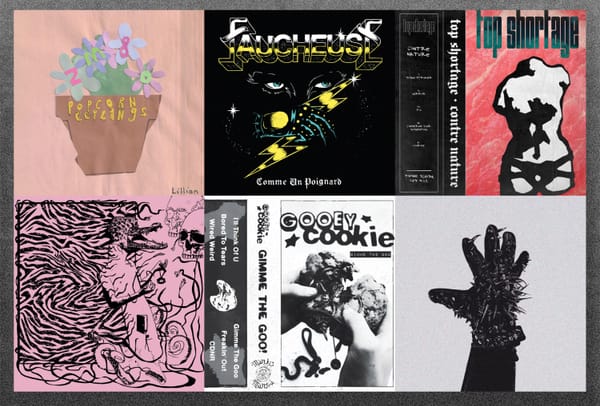
I definitely come from the hardcore punk kind of world, and that’s like how I know most of the people that I know music-wise. But it’s weird because there’s very little of that in Chicago right now. Every time a hardcore punk band comes to town, there’s just like two or three local bands that would make sense to play those shows. Shout out Navaja and Mock Execution. But there’s a lot of like weird indie music happening in Chicago, and it’s really dope ’cause it just felt like I wasn’t aware of that kinda stuff when I was younger and playing in an indie rock band, and now there’s so much, it’s awesome. Shout out to Hunting Scene, Kitship, and Memory Card, too.
It goes back and forth. Today it’s pop, but soon people will go crazy for hardcore again.
Yeah, I definitely am looking forward to playing in a hardcore band again. Until recently, I was drumming in this hardcore band called Double Over. We pretty much finished an EP, and we just need to put the finishing touches on it, and we’ll put that out soon as well.
Are you playing with anyone else right now?
I play drums in this band called Alive Girl. We’re working on new music now. It’s cool and weird, like if the Sugarcubes were a fucked up prog rock band with an SP-404. I’ve played bass in this hardcore punk band called Sniper Culture since 2018, we had a reunion show last year and I think we’ll make a new record in 2026 and hopefully play some more shows. Oh, and I think I’m gonna play bass in the band Bullseye for the tour they have coming up.
What else is next for you and National Photo Committee?
I guess I’m excited to make some music videos. Making videos is my first love, and I've taken a really long break from doing that and I'm excited to get back into it. I’m making a documentary about door guys, so I’m excited about that too. And I’m excited to write and record more music this year.
see/saw is a reader-supported publication. If you enjoyed this piece, please share and subscribe to the newsletter.