mesh’s boots on the pavement view of philadelphia
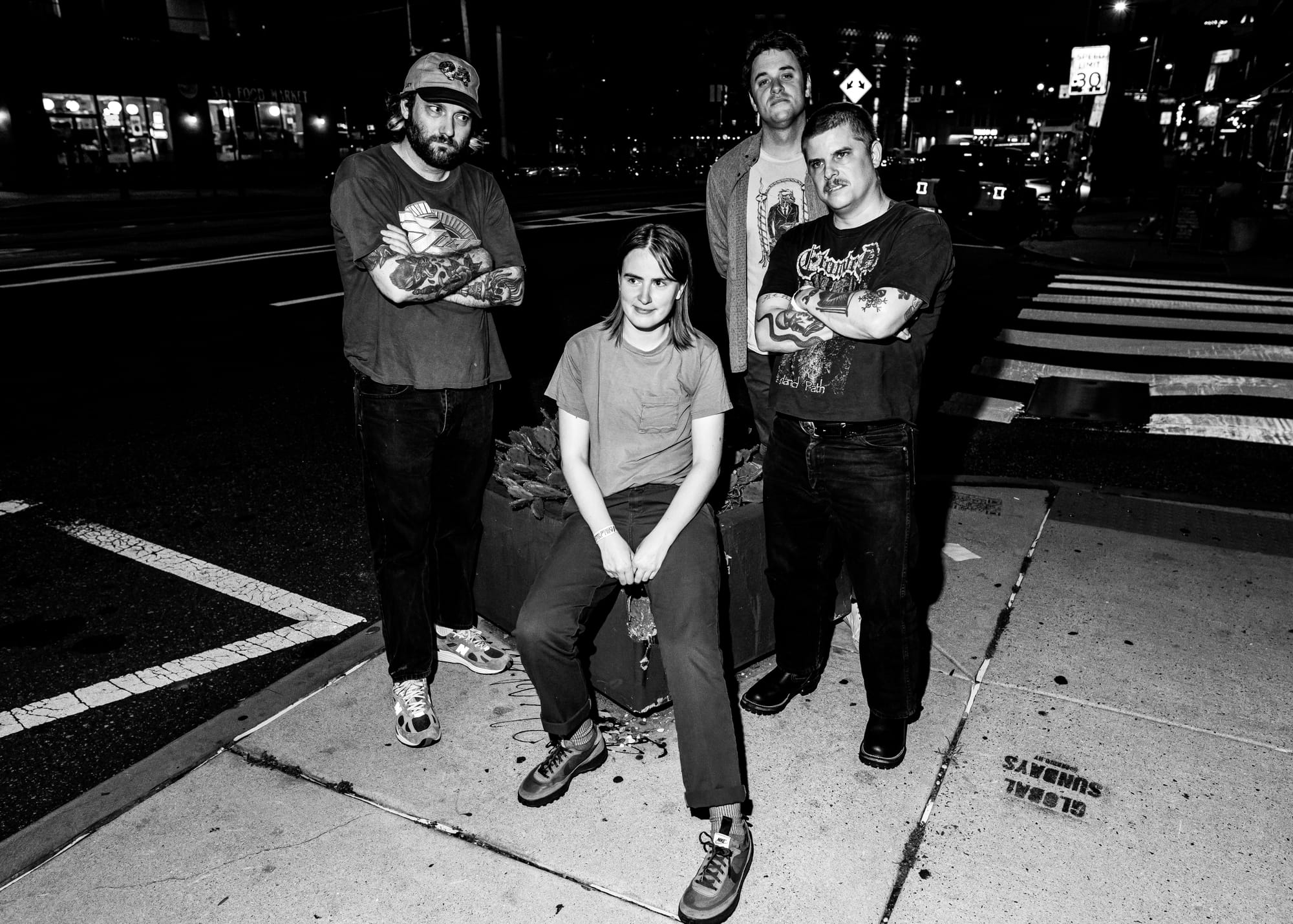
Following the release of their new album No Fun at All, the band discussed coming together pre-COVID, their slurry of influences, and the state of Philly’s DIY scene.
The title for the new Mesh album is—and I mean this lovingly—quite misleading. Their album No Fun at All operates on melodic, textural, and thematic levels, all while making it hard not to groove around to it. On this newest record, the band offers tight lyricism not just in the songwriting, but also with the melodies and progressions, all paired with the sharp edges that could only come out of true Philly DIY heroes. Guitars are textural and jagged, the rhythm section sounds gargantuan, and the songwriting is simultaneously playful and thoughtful.
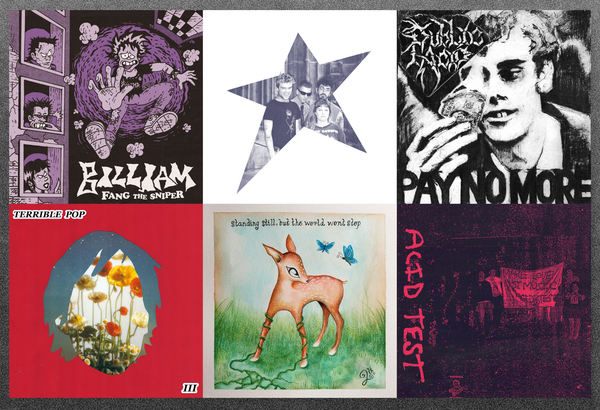
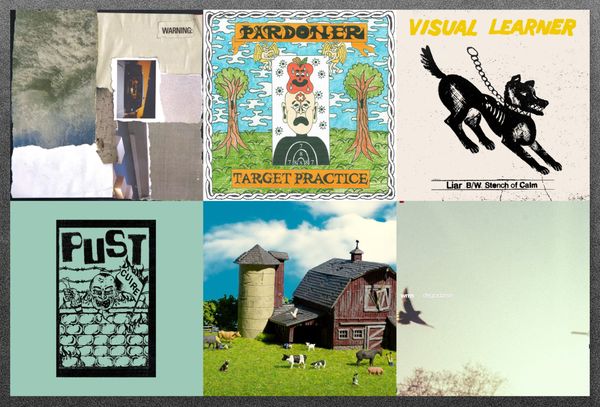
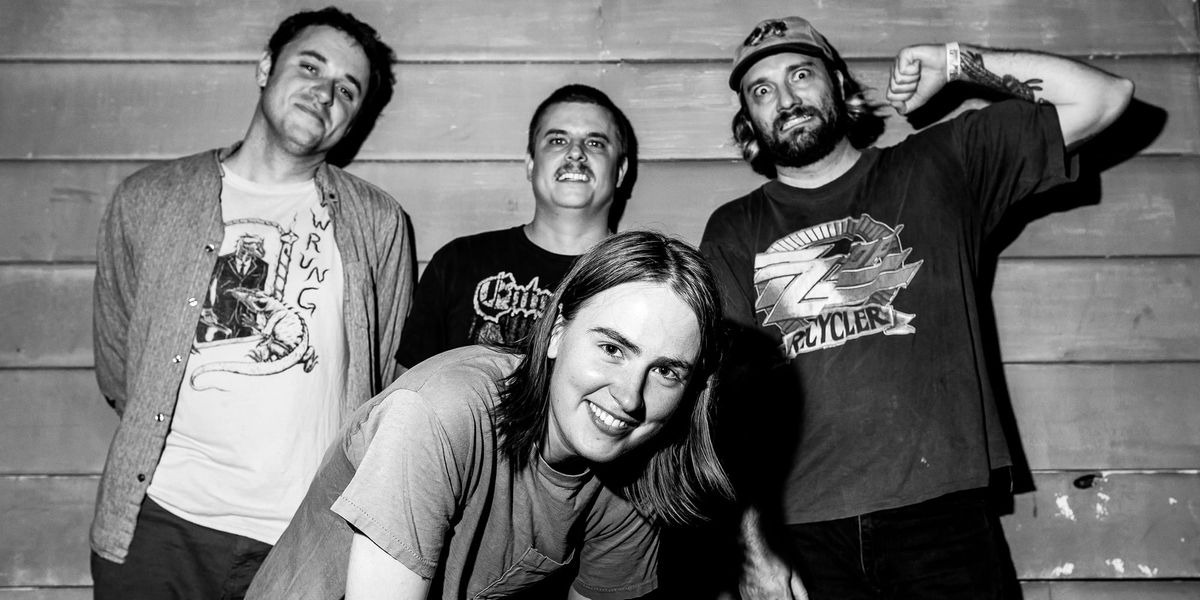
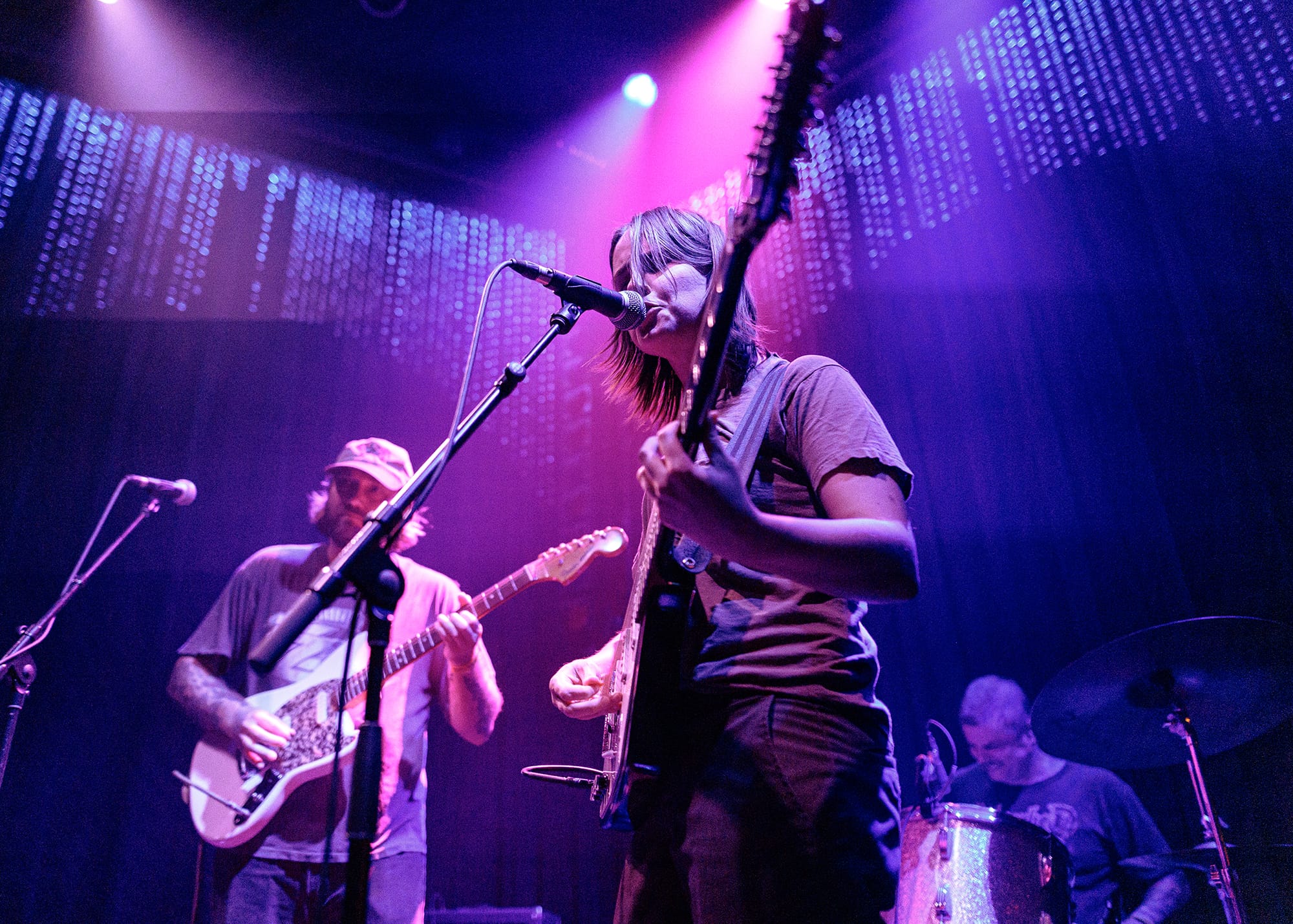
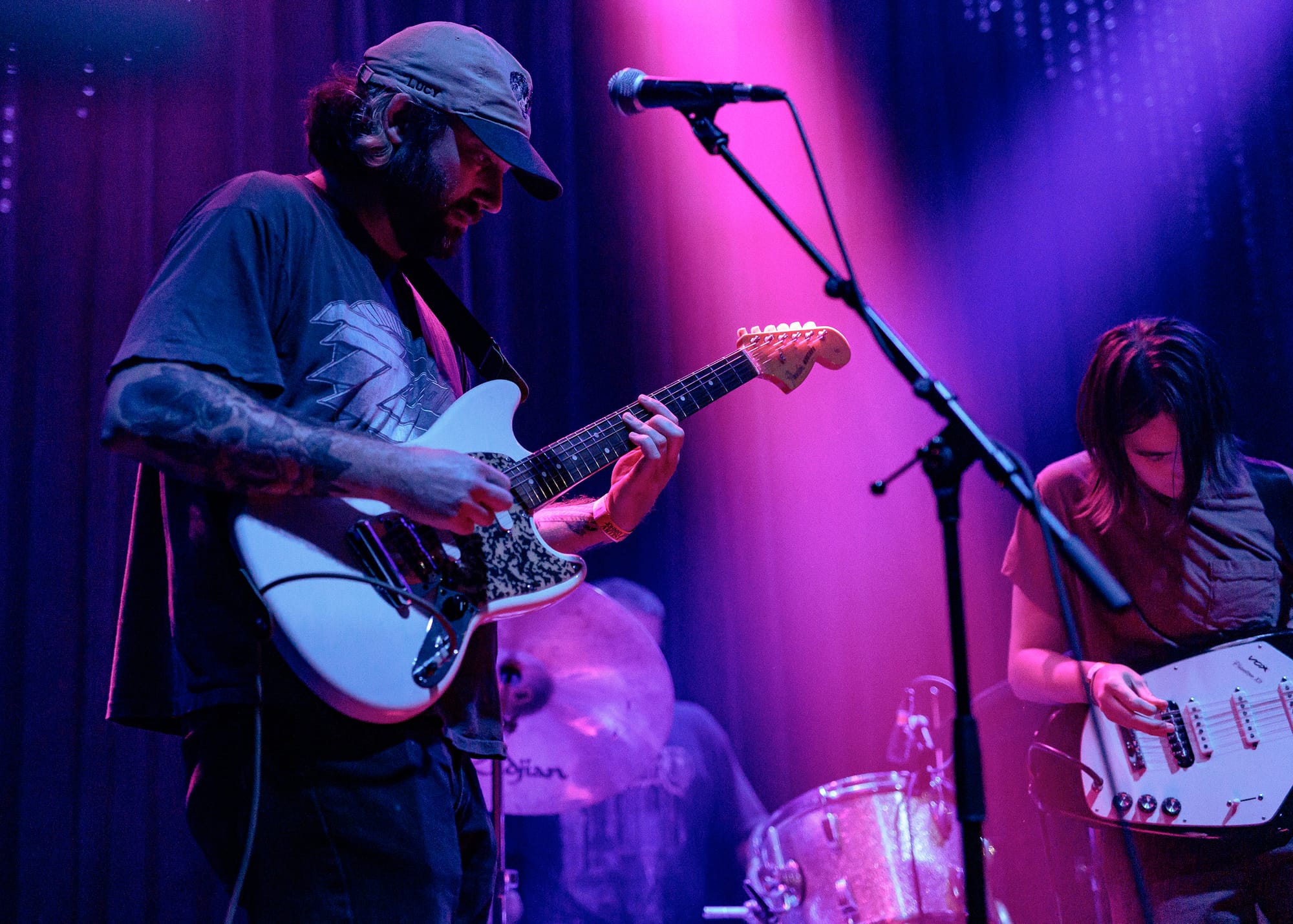
Despite having just three releases, Mesh has been pervasive in the Philly scene for about seven years. They released their first self-titled tape in 2021 on Chicago’s Born Yesterday label and have spent the past five years writing and playing around. Sims Hardin and Allison Durham are co-songwriters in the band who both contribute vocals and guitar; Durham, specifically, plays 12-string. Tom Riese and Steve Darling hold down the rhythm section. Their songs on the new album are about landlord-tenant relations, quitting your job, and Mr. Potato Head.
After some bad weather messed up our plans to meet at the Good Flying Birds show at Spruce Street Harbor Park, we instead met at Poste Haste bar in East Kensington—a spot I don’t believe any of us had ever been to. (The initial back-up plan was to meet at Posture Bar in the same neighborhood, but we got in there and it was swamped with fantasy football players.) We sat near the door in what I thought was kind of a player’s lounge, but it was right next to one of the heaviest doors ever that slammed like hell each time someone went in or out. You could feel a big gust of wind when it shut. It was the eve of the album release show at Johnny Brenda’s, and we quickly got into the subject of their process.
Steve: Listen, I can’t read or write.
Tom: It’s true, he’s like Animal. Play drums, bang bang, play drums.
Steve: Me eat food, me lift heavy rock.
Tom: It’s true, he does lift heavy rock.
Tell me about the start of Mesh.
Sims: Steve and I ran into each other at shows and he asked if I wanted to jam. Then we asked Tom to jam too.
Allison: Steve and Tom used to play in MINT together.
Tom: It was a punk band. Someone called it a funky punk band, and we played hardcore music.
Sims: At some point the band I was in at the time broke up. A little after that we asked Allison to join.
Allison: I actually knew Tom and Steve before Sims. I met Steve in 2018 through our mutual friend Austin, and Tom I met through our St. Louis friends through doing shows and touring. I eventually met Tom proper at LAVA Space.
Sims: Tom was doing the booking for LAVA Space, and he booked my band at the time that I was in with Sonam of Eraser. My band broke up and Tom and Steve’s band broke up.
Allison: And I graduated from college.
Sims: So from there, we wrote the songs for our first demo together, which I then produced at my house. Specifically, the 2019 demo. Those were songs that we wrote together. Then we played two shows with an Australian band called Thigh Master (now called Dippers), and another band that later became Menu, as well as the bands Null and Joyer.
Tom: Wow, I don’t remember any of that shit.
Sims: And then the pandemic happened.
Tom: Yeah, that first show was late 2019. Then after the lockdown there were more considerations, like one of us had a kid for example, and we decided not to cross circles so much. It was a big pause.
Steve: The pandemic really threw a wrench in things, and it was such a bummer. Everyone was off work, and the immediate thought in the back of my head was that “this is the time to write two or three records” but oh wait you can’t be in a small room together.
Sims: Thankfully before the lockdown, we had recorded parts of the 2021 tape together, which we put together piecemeal afterward.
Tom: If only we were anti-vax, then we could have made more records [laughs].
Allison: Our friend Ian from Null was a throughline here; he mixed our 2021 record and this new one. The reception to the first tape was crazy, I was shocked people liked it so much. I literally recorded my vocals and parts into GarageBand on my 2011 Macbook.
Sims: But that was what made it cool, there were a bunch of hands that touched that record.
Allison: It was also crazy how we got connected with Born Yesterday. I was booking a show for Greg Obis of Born Yesterday for his band Stuck, and they were going to play a show with us in March 2020 which got cancelled, but Greg offered to release whatever we put out, sight unseen.
Sims: There was really something to recording at home that ended up forming our style. Because of those recordings, we were making more of an effort to sing melodically. That informed the way we generally play now.
Allison: I was also thinking like “we don’t need to just be a punk band, we can do more with this.”
Tell me more about being in Philly after the pandemic, like 2021 onward.
Sims: Lots of shows were cancelled.
Tom: I can’t even remember what shows we were going to.
Sims: When our 2021 tape got some traction we had the urge to play live again, which was super frustrating.
Allison: I have some personal opinions about the scene in Philly, but that’s another article. On a more positive note, when they started happening again shows became more welcoming. People were less likely to take for granted the fact that we can have shows. The DIY scene obviously took a hit, and lots of those venues don’t exist anymore. On the negative side of things, something weird happened before and after COVID. Pre-COVID, people were more inclined to just name their house and start booking shows as a venue. Post-COVID, people started doing this thing where they book under a brand. So there were still these “DIY” venues but they were now monopolized by a brand. People started to kind of stake their claim at venues, like to say if you wanted to play here you have to go through more promotional stuff.
Sims: There are certain groups that are definitely more capitalistic about it. But some of them make up for it by doing free shows too.
Allison: Right, so it’s a net good now, but that wasn’t always the case. It makes the DIY ecosystem, maybe not more gatekeepy, but less grassroots minded.
Steve: Pre-COVID, I heard about a lot more stuff through Facebook, but after and especially now, people are way more about content creation and brand management. They think knowing about them is more important than the music itself, and that didn’t always used to be the case. And it’s not just with music, everything now has to work within the algorithm.
Allison: I have friends that can’t get shows because they don’t have that cool factor.
I know what you mean, I’ve had friends in L.A. for example who were musicians, but were driven away by the clout-chasing aspect of it.
Tom: I’ve heard about people getting booked because of their follower count, which is a more quantifiable thing but also buys into the algorithm focus rather than taking chances.
Sims: There were lots of DIY houses pre-COVID, but now there are people booking shows all over. But there are also people that are booking for free, which is really cool, like they don’t have to do that. The houses used to not take money, but now they are more often. Overall, it’s good because those venues can still combat the bigger brands booking all over. I remember it used to be a lot harder to get people out to shows, but now it’s easier to get people there, which is cool. Thankfully, we don’t deal with gatekeeping really. We have some level of cred and enough friends in the scene to keep us connected.
Allison: It definitely becomes easier if you are out there making friends.
Tom: Another thing that helps is that we all have booked shows and paid our dues, so to speak. We do nice things for others and have a level of goodwill built up from that.
Sims: We do things for the love of the game and at the end of the day we are music nerds. Tom booked a lot of shows.
Tom: Especially for LAVA Space, but I’m retired from booking now.
Allison: LAVA Space was really cool. There needs to be a documentary about that place. I went to lots of shows there.
Tom: You used to be able to start volunteering easier for those kinds of places, which was a great way to meet people.
I’m curious about how Philly living outside of the music scene has been over the last few years. I’d love to hear some pros and cons.
Sims: The people from Philly are amazing. The arts and punk scene was really formative. I moved here and met a billion cool people. One bad thing is all the trash. Also, I lived in a very ungentrified area which was good, but also lived across from a trap house and would see a lot of people suffering. Some of those neighbors became my friends, but they were suffering at the hands of slum lords.
Tom: And that’s not a Philly unique thing, but a general big city thing. Lots of people move here to and from New York. What’s weird is that whole bands have relocated. But a place like New York can be tough, too. I used to live in York, Pennsylvania and my house there had a basement. And in bigger cities like NYC, I didn’t initially realize how unique and special a basement could be. Philly has a lot more availability as far as DIY venue and practice spaces go.
Steve: Speaking to that, Philly feels like the last major city in America where you can have that practice or venue space or even have a chance at owning a house. That doesn’t exist in L.A., NYC, or Chicago.
Allison: Maybe in St. Louis it’s a possibility, too.
Tell me about the formation of the new record as well as some musical inspirations for the new album? Who was everyone listening to?
Steve: I listen to a lot of jazz and metal. Miles Davis and Mahivishnu Orchestra come to mind.
Tom: I’m a big funk and old hip-hop person. Nirvana is always in there too.
Allison: Lindsey Buckingham, Nanci Griffith, and Fairport Convention like I mentioned earlier.
Sims: The Fall, Homosexuals, the UV Race, and Spiral Dub. As far as the formation of the record goes, there was lots of songwriting over the last five years. But it’s a collaboration, like Allison and I do sort of writing workshops and I have a pretty regular songwriting practice.
Allisons: Sims is the main songwriter for sure.
Sims: I also have mental illnesses, like ADD and depression, that contribute a lot. Allison is also a really great songwriter.
Allison: The songs that Sims sings are typically ones where Sims has brought a frame of the song to the group. The same goes for the songs that I write.
Tom: That reminds me of older punk records I listened to where I first noticed that the two or three songs on the record where someone else sings are probably where the bass or guitar player brought a song to the group. It adds a nice break in the sound of those records and for ours too.
Sims: Sort of like Canned Heat where there’s Bob Hite who sings most of them, but then there’s that other guy.
Tom: Exactly, so Sims and Allison trade off, and it makes the recording dynamics very cool.
Sims: “Potatohead,” for example, was very much a kraut rock song, which started with the drum beat, and then we added a lot of crazy shit on top of it. I have tunnel vision for a song, and the rest of the band brings a lot of texture to it.
Do you write lyrics down?
Sims: My phone has so many lyrics on it, which usually end up being the bones for the songs. We have lots of bones for the next record in there.
The lyrics and instrumental melodies work very well together on the new record. Everything feels very cohesive while having all these diverging influences mixed in there.
Sims: It also helps that Allison is a great guitarist.
Tom: The 12-string helps distinguish the different guitar lines.
Allison: I’ve actually only ever played 12-string for this band.
Sims: Not true, you played regular guitar for a bit at the very beginning.
Was including a 12-string guitar an active choice?
Allison: Like Sims said, I was playing six-string initially, then Sims got a shitty $100 12-string and asked if I wanted to try it out. That’s the guitar you can hear on our first tape. Eventually I got a nicer one. But no, we didn’t go into the band planning on having a 12-string.
It makes the guitar sound way bigger, especially on the song “Violent Peasant” which has that bad ass medieval sounding guitar line.
Allison: When I wrote that, I was practicing to play in a Fairport Convention cover band, so I was definitely culling from that.
Sims: The song was actually called “Violent Peasant” before we had the guitar.
What was the story with that song?
Sims: That song was written about my neighborhood. One night, there was this crazy loud pounding at my door at 3 a.m. Over and over. It woke me up, and my partner freaked out. I didn’t know who it could be, so I went downstairs and saw this shadowy figure through the old frosted glass door, but I couldn’t really see through it. I went back upstairs to look out the window there, and saw this cloaked figure at the door.
Tom: You mean like a hoodie?
Sims: No, it was so weird it wasn’t like a hoodie. They looked like an archer or something. It was actually a guy coming to get drugs from the trap house across the street and had our house by mistake. I opened the window and yelled out the window at him, and he ran off. But he had this long hair and this weird cloak. My neighbor asked who that was, and they thought it was their landlord who wouldn’t stop bothering them. That made me think a lot about the people suffering in the neighborhood and the housing situation with scum lords. Allison’s guitar really made that song. It turned it into this dreamy proto-punk song. Steve’s drums are also powerful in that.
That song works on a lot of levels.
Sims: It really represents how we write these days.
Allison: This record spans a lot of years. Some were written in 2021, some in 2024, and some pretty recently.
Tom: We actually played “Regular Guy” at a show for our first tape way back in 2021.
Tell me a little about “Weapon of Peace” and the choice to include cello.
Sims: That song was originally for a comp, but it didn’t have the cello on that version. The song was kind of destined to be a disaster. Basically, we recorded the drums at our friend Ian’s place in South Philly, and there was an issue with the space not sounding how it normally did because someone messed with something. Steve did a good job, but the mix of the song was chaotic. We ended up recording more in that space. The song sounded good, but I thought the song would sound cool with cello. More importantly, it was our protest song, specifically about what’s happening in Gaza and against Israel. But Em was a friend of Allison’s from Missouri. Em and I had jammed some and I knew they were an amazing cellist. We sent them the song, and it got assembled in a piecemeal way. Em sent us lots of different takes, maybe 20 or so, then Ian mixed it.
Allison: The compilation was to benefit Gaza Soup Kitchen, and the band was the Dissidents, which was a big honor to be included on. We actually questioned whether to put “Weapon of Peace” on the record, but at the last minute decided to include it. I first met Em when I was playing in my first band Posture in Missouri, and we met Em in Columbia, Missouri at Cafe Berlin, where and we played the worst show of my life there opening for Chain and the Gang, as well as Em’s band at the time Florida Oranges, which I think later was affiliated with Buttchug 69. Me and Em go way back.
“Quit My Job” really resonated with me. I love quitting a job. One of the best days of my life was quitting a barista job at Di Bruno Bros in Center City.
Sims: Who doesn’t love quitting a job?
I skipped and whistled home. Any good job quitting stories?
Sims: Oh yeah, I was working at this cafe for this guy who was the son of rich real estate mogul parents who had built him a whole cafe to run. They had these windows that didn’t work very well and this alarm system that was very easily triggered whenever the wind blew and opened one of the windows. Then the next day he would blow up at me for not closing up right.
Tom: Did anyone steal anything?
Sims: Not even that! He was just annoyed that he had to get up in the night when the alarm went off. He was extremely disrespectful to me. Another time he invited me to a War on Drugs show and he said he had extra tickets. I came, and he told me right outside the show that I owed him $80 for the tickets. I said I didn’t have any cash on me, so he just said he would take it out of my paycheck. I can’t remember if it was then or another time but I flipped him double birds at one point and said “fuck you.” So yeah, one day I quit, early in the shift on a busy Saturday, and took the bus home.
Birds started singing, color came back into your world?
Sims: Very much yes.
Steve: Sometimes it’s not even disrespect, some people just don’t have their shit together business-wise, and you realize that you can’t be there anymore. I’ve got a few stories like that. I worked at a super high end furniture place. The owner was an eccentric billionaire, and we made stuff for celebrities like Beyoncé, probably just going to their beach houses to never be seen. It was a nightmare working there, this guy did not understand the labor required for the furniture and just assumed we had the same passion he did and would expect me to work like 70 hours.
Allison: I had a job that I knew would be temporary because I was going back to school. It was a sandwich shop in St. Louis. Minimum wage working with high schoolers. When I started, they had a shift meal, then about two months in they announced to everyone that the shift meal thing was over, but that they could take 10% off our food—for sandwiches you make hundreds of during a shift. It was so dumb. So then me and these high schoolers would make these mini sandwiches and secretly eat them in the walk-in. The manager was onto us, and accused us of “stealing property” and I was like, “No, this is a sandwich.”
Cody Triplett is co-founder of The End Press. Follow the End.
see/saw is a reader-supported publication. If you enjoyed this piece, please share it and subscribe to see/saw.