age of peace’s idyllic and necessary gear shift
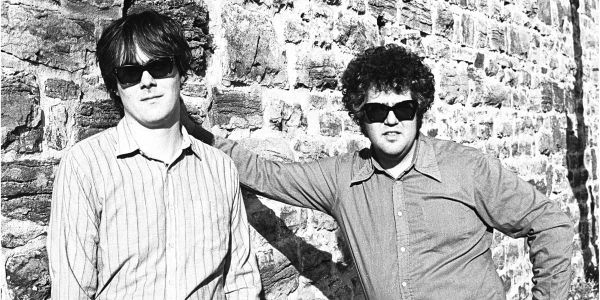
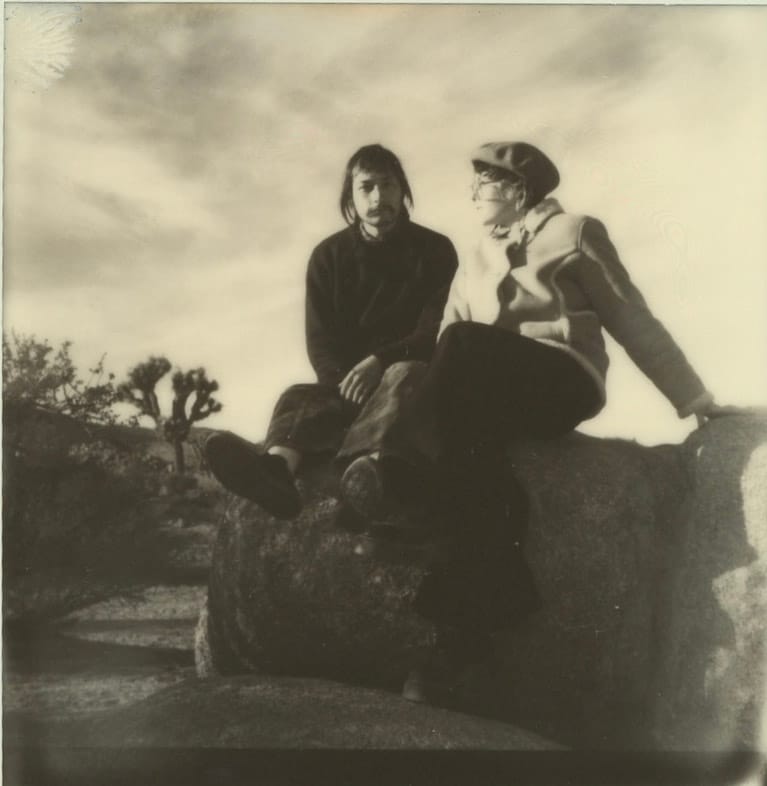
Angie Willcutt and Micah Wu made waves with their vibrant and playful punk outfit Artificial Go. The Cincinnati duo find folk sanctuary as Age of Peace.
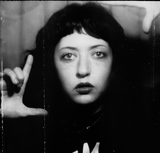
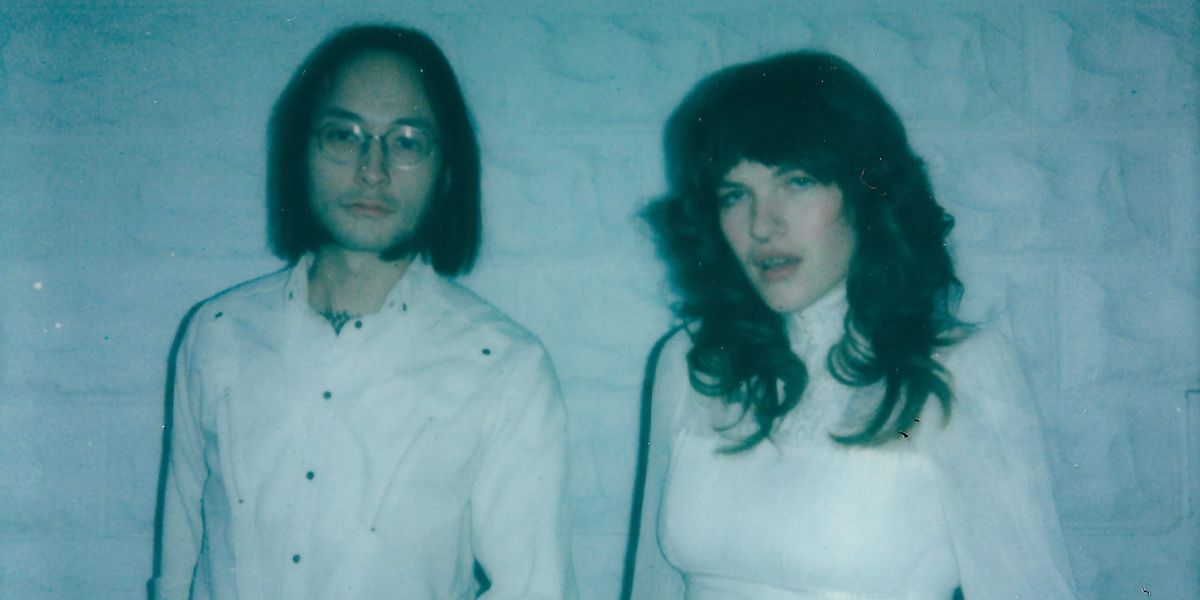
Angie Willcutt and Micah Wu are already prolific creatives in the first stage of their careers, jetting around with constant output between projects like Artificial Go, ROD, and their respective solo catalogues and artworks. But the couple has always come at their work with a sense of grounded, hand-crafted spirituality. That’s why Age of Peace felt like a natural next step in their practice; it was a part of them all along.
The Cincinnati folk duo’s album Ode to Life is grown out of time spent together between hectic tour schedules. It feels like being invited into the very home where the album was recorded—listening to warm tapes while drinking tea that Willcutt blends herself. But to call this album a depiction of domestic bliss feels too simple, as it grapples with themes of global strife and a connection with nature while the tom drum beats on.
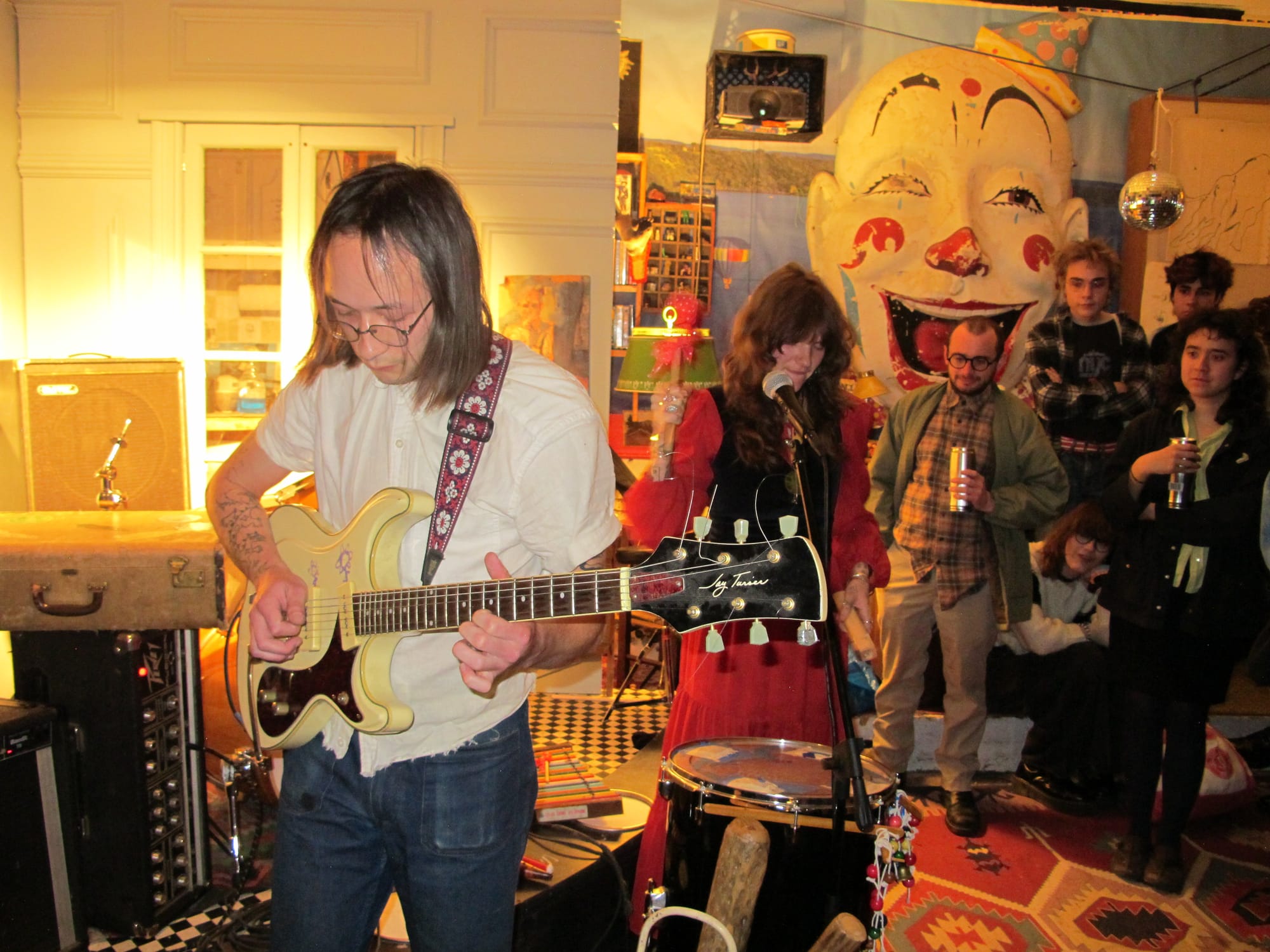
Wu is able to channel the electric guitar towards its most intentional, delicate state, while Willcutt—typically known for her boundless onstage energy—stands in one spot, percussion in hand with a voice that swirls towards the sky. Alongside Harry Sings’ recent album Christie’s Toy Box, Ode to Life solidifies the label Blushing Grinning as a place where punks can express their softer side.
On the last day of their eight-stop tour, the band sat down for a chat in WFMU’s kitchen following a radio session with the Jersey City station. They spoke about their creative process, collecting instruments, and the difference between their live and recorded work.
Since we’re doing this interview on the last day of Age of Peace’s first tour, I’d love to know how it’s been.
Angie: This tour has been really good. It’s been a lot more slow-paced than when we tour with Artificial Go, so it's refreshing in that manner. I have really enjoyed the bands we've played with as well.
Micah: I feel like we’ve been able to connect with people on a deeper level than I’m used to, just because of the laid-back atmosphere and energy that we put out with this music. Lots of hanging out, lots of good bands. Pretty good turnouts at the shows. Good drives. We’ve seen the rain and we’ve seen the sunshine as well, so the weather’s been keeping it fresh. We did split off halfway through to play a couple of Artificial Go shows, and we just got back to it yesterday in New York City at Brothers Wash and Dry. And although it was a bit jarring, we had a great time.
How do you keep your head straight when you’re working on so many projects?
Angie: Lately, my brain has been doing hula hoops. A bit overloaded, but it’s also what I want to be doing. So I am riding the “see-saw” of work and passion. It’s been fun, but it’s mainly been the behind-the-scenes planning to make these tours and releases happen that was a lot to juggle. Now we just get to do the fun part where we tour and finally show the world what we've been working on with both projects. That’s felt good.
Micah: Home has not necessarily been a place of rest like I think it should be as of late, and so just leaving that environment has allowed us to be more present. Although this was a bit of a stressful situation, hopping between bands halfway through a tour, it’s been easier than dealing with the work at home looming over our heads throughout the day. And since it is so fast-paced right now, there’s not much energy to even be thinking about the future or past, so it’s all working out. My brain didn’t turn into spaghetti somehow.
To focus on Age of Peace, how did you guys come to start this project?
Angie: The inspiration truly was to make an “age of peace” for ourselves. As much as we love punk rock music, and we’re not gonna stop doing that, we really needed something that was different. It felt really healing to focus on some slow, intimate music, especially just writing between the two of us as a couple.
Micah: Yeah, we definitely have roots in folk music or singer-songwriter music, along with other genres. I started writing songs during the pandemic on a Harmony Parlor guitar and met Angie shortly after, who had written over 200 songs at that point—a lot of which were on acoustic guitar. I started writing a lot of the compositions after returning home from a five-week tour with Artificial Go in 2025. We just kind of took it one song at a time, and then all of a sudden we had a collection that we sat down with in the living room with the four-track and just pumped out in about a day.
Do you think there’s a connection between punk music and folk music?
Angie: I think it’s really saying what you want. And that folk music does have a lot of resistance in the way that punk does. And at the end of the day, I think a lot of people are spreading similar messages, just worded differently and sonically differently.
Micah: Yeah. It really is doing what you want with what you have. There are silly punk songs and political punk songs, and they’re probably just as many political folk songs and silly folk songs. But they’re all done without the need for anything else but what’s around.
Can you tell me a bit about the two lead singles, "Rainy Days” and “Dead Alligator,” and how you wrote them?
Micah: I think “Rainy Days” was the first song. I was messing around with alternate tunings on guitar because I felt myself falling into routines, playing the same things, and feeling uninspired. And that came out after listening to a lot of K. Liemer. I don’t think it sounds like any of his songs in particular, but it gave me a similar feeling. Then I ran downstairs and just hit a little Mo Tucker on the drums. That’s the one song where I do play drums on the record, and [Angie] holds it down on the floor tom on all the others.
Angie: "Dead Alligator" was a song from when Micah and I took a road trip to New Orleans. We saw a dead alligator on the side of the highway, and I actually used to pick up roadkill when I lived in Kentucky. I preserved bones and pelts for five years, so I’ve always had an eye out for roadkill, and we had just never seen a dead alligator. So we made a jingle song about it, and we kept singing it as a vocal song for about a week straight. We came home, and Micah wrote guitar to turn it into a full song. That was fun to just sing it like a nursery rhyme in the car.
Micah: Yeah, and that really lightened the situation of having bronchitis on tour.
Angie: That technically was the first Age of Peace song. We wrote it like two and a half years ago, and we knew we wanted to release it at some point, but it didn’t feel right to do it until we had Age of Peace.
Micah: Right. I guess “Rainy Days” was more of the push to start a new thing. “Dead Alligator” being the first song fit into that new idea. Which is really nice to have a reason to be able to put it out.
What was your lyric-writing process for the rest of the album?
Angie: It’s really more poetry than ever trying to write a catchy song when writing lyrics. In general, I try to keep it a stream of consciousness and to let my hand write before I think about what I’m gonna say. And a lot of the lyrical writing for Age of Peace felt very spiritual, like an open channel for me to access my spirit, and I really just tried to keep it as a long, strung-out poem, and I let myself get out like vomit, and then I evaluate what I wrote, and then play with the melodies. Sometimes the melodies do come first, and then I’ll write lyrics.
Micah: Your art seems very instinctual to me, which is really cool.
How would you say the songwriting process for Age of Peace is different? Does it take inspiration from Rainbow Valley more so than ROD or...
Angie: I would say yeah.
Micah: It was a bit of a dilemma sometimes. With “Rainy Days,” since that was the first thing, I wasn’t really sure if I was going to use that for myself or if Angie was gonna sing on it, but I didn’t really feel compelled to say anything on the track. Although it could have been instrumental, I think she really allowed it to blossom as a track.
How do you make that decision?
Micah: Well, Angie’s just got such a beautiful voice, so it’s kind of hard not to want to have her sing if she feels so inclined.
Would you say the other projects have an influence on this one, or do you like to keep it completely separate mindsets?
Angie: I try to keep it separate in my mind. It’s almost like different characters, different parts of me. But of course, being a part of all of those projects, everything will inevitably bleed in together at some point. So I wouldn’t be surprised if things start tying in other ways. But with Age of Peace. Micah has been tying in ROD elements through doing live looping and tying in our past electronic musicianship into this folk project.
I didn’t know you did that component live because I just heard the album, so that was really cool to see.
Micah: It’s fun to have an aspect of a live set that’s not 100% nailed-down routine. Give it a little twist, get a little more atmospheric with it. And I also can't use 10 minutes out of our set to tune my guitar. I like to use my looper pedal and my delay. There is some of that on the record, but most of the songs are played completely dry, just guitar straight into the end. We just made it as raw as possible for the most part, with some supporting spatial elements here and there.
Can you tell me more about your recording process for Ode to Life? You guys are known to home-record all of your projects.
Micah: Yeah, some of the songs started off with me just playing a classical guitar, and I just had my Walkman set up in front of me. So it was initially just going to be used as a tool to collect ideas and rough drafts, but there’s something special about being able to hear the spool being wound along with the guitar. It just gives it some perspective. It makes sense that we made it in the living room. I think it sounds like we made it in the living room. But we would record guitar on a Walkman, bounce it to a four-track, and she would lay down vocals. Some of the songs we just played live together.
Angie: There’s one song I played guitar on too, “Love on Strings.”
Where do you find all your percussive instruments, Angie? How do you know when to apply them?
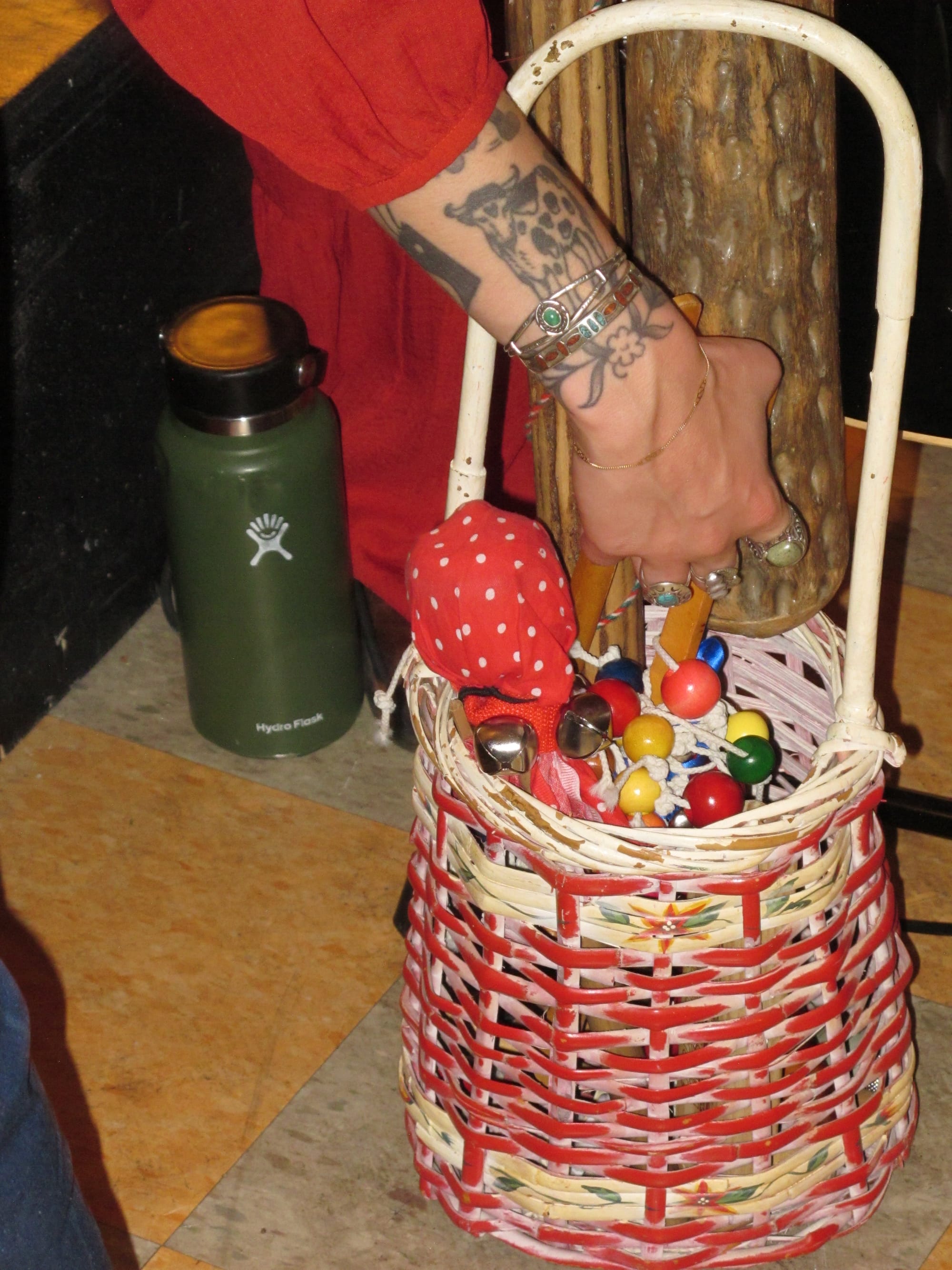
Angie: All of the instruments that I use for this project are ones that I already had at home. So it was just simply picking up what was sitting around. If I’m at a thrift store, antique store, or music shop and see a random percussive instrument, I’ve always been gravitated towards wanting to play with it. So it’s been fun to incorporate the ones I’ve collected over the years.
I got the Ocarina flute for Christmas from my mom; one rain stick was from my mom, and then the other rain stick I found at a thrift store. And I found a steel tongue drum at the same thrift store. I wanted to have a jingle mallet, so I added a Velcro children’s bracelet to a drum mallet and some red polka dot fabric to create the sound and the visual aesthetics that I wanted. I also made a wooden bead stick that I put on the tom drum for visual and a little bit of sound, but it's always random when I choose to use the percussive instruments when writing and during the tuning segments of our set. I just play around with whatever.
Micah: It doesn’t sound random to me. Sounds natural.
Angie: Yeah, but then there’s the flutes. I play a slide whistle and an Ocarina flute, and neither of those things I know how to work, so I’m just always freestyling. I’m trying to see if I can figure it out as we go.
Micah: You’re just an artist, I guess.
I’m also curious about you building the aesthetics in the world around Age of Peace. Everything you do has its very distinct energy and vibe, like with clothing and art. How do those decisions get made?
Angie: For me, I just really feel in character for everything I do, and I embody the character. I also am a visual thinker, so my thoughts have pictures as well. When experiencing and writing this music, I have pictorial thoughts that are much different than any of the other projects we’ve done because it’s totally different music. And I think that when I’m a part of any musical project or art project, I embody it intensely in a way where I want to embody it in every aspect. So when I’m feeling the music, I want to feel the world of the music in every aspect of life.
Micah: I think also being somewhat limited with our instrumentation helps with that. I love to just hop around to different instruments to write songs out of the inspiration that comes out of working with something new. But all the songs that I personally wrote were just on guitar, and I feel like that kind of nailed it down. Also messing with different tunings. There was a constant feeling of having no bearing.
I’m curious about the “Dead Alligator” video—how that came together.
Angie: For “Dead Alligator,” we knew off the bat we wanted that music video to be playful with puppets. And I wanted to make a puppet theater, which I had never sewn before. I have my sewing set up in our kitchen, and I sprawled out all of the fabrics I had on the ground and just pulled every fabric that felt like the sound of the music. And then we had a friend help who does puppets in Lexington, Kentucky, who did help make a few puppets as well, and acted it out with us.
How does film feel as an expressive form as opposed to music?
Angie: I think I love all outlets of performance where I really enjoy doing film stuff and music, so to me it’s really fun doing music videos.
Micah: We both enjoyed film prior to meeting one another, such as making home videos with siblings. Or I used to skateboard a lot and make skateboard videos with friends. It does feel like an afterthought sometimes when it is paired with music, mostly due to our schedules being really, really busy lately. But I had a lot of fun with the videos that we made, and I’d love to make it even more of a priority in the future.
We’ve been having fun doing some Artificial Go music videos lately, and I think those are gonna definitely be a level up from what we’ve done with that band in the past. So it's been kind of maybe eye-opening to see what a music video can be.
Angie: We have people that are helping, so that’s been a new experience.
Your growth with Artificial Go has been amazing lately, but do you feel like you’ll always need to be doing something DIY, like Age of Peace, even as you grow?
Micah: Yeah, most definitely.
Angie: I feel like that’s in Micah’s and my roots of being from Kentucky. All the artists and musicians in Kentucky are some of the most DIY people I’ve ever met. And being raised there, I feel really conditioned to that. Everyone just has to make their own vision since there’s not as much going on.
Micah: Yeah, but I don’t think either of us ever wants to lose our individuality. I think that would be really sad if we never made anything ourselves ever again.
How’s Cincinnati different working there creatively than in Kentucky now that you’ve been there for a few years?
Angie: More bands come through on tour in Cincinnati. So we’ve been able to play with more bands that live in different areas, and we’ve been able to play the music we do with more adjacent groups. Just overall, with it being a bigger city with more people, it’s just been nice. There are lots of people playing different types of music, which is always refreshing.
Whatever band comes through, you have a project that could possibly work on the bill.
Micah: Which can be stressful sometimes, but it’s fun to meet new people and potentially see them again in their city.
Angie: Something that has been fun about this tour has been that we made a tour bucket list. We’ve done that with Artificial Go, too, and we’ve been checking ’em off.
Like what?
Angie: Get licked by a dog. See a constellation. We can’t say all of them.
Micah: We should have put “get stopped at the border.”
Angie: Yeah, we got searched at the border in Canada, and it wasn’t our first time that’s happened on tour. They were investigating the rain sticks, trying to see what was inside, and I was like, “That’s beans.”
What’s next for Age of Peace?
Angie: We have a song coming out on a Blushing Grinning compilation. I think overall we just want Age of Peace to be our sanctuary of music—where we can have a space to take it easy at home and DIY. We will probably tour again one day, but I think we’re most excited to just have something at home to work at that's simply just for us. And then when we’re ready, we’ll share it.
Go listen to Sydney Salk’s show on WFMU. see/saw is a reader-supported publication. If you enjoyed this piece, please share it and subscribe to see/saw.